


Developers have submitted an environmental permit application for a Swedish wind farm that is expected to generate 289GWh of electricity per year.
Fornybar, a joint venture involving Eolus and Hydro Rein, is seeking to build the Humletorp Wind Farm in the south-eastern part of Årjäng Municipality.
It has been just over a year since Fornybar conducted public consultations to gather input for the environmental impact assessment, which is included in the permit application.
The wind farm would have up to 12 turbines, the developers said, with a maximum height of 300 metres.
Its estimated annual electricity production is the equivalent to that of around 58,000 detached houses.
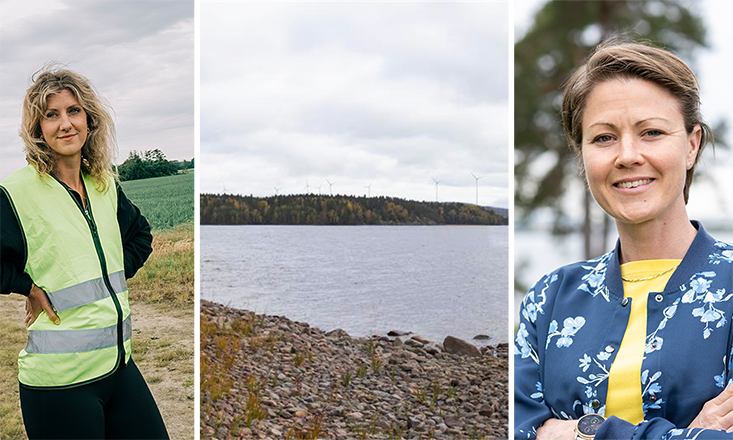
Permitting manager for the project Emma Lundström (pictured left) said: “We have conducted thorough assessments of wildlife and nature, as well as studies related to residential environments, and we are now ready to apply for an environmental permit.”
The developers say the area, covering approximately five square kilometres, boasts excellent wind conditions and few conflicts of interest.
During the consultations, Fornybar presented a compensation model for nearby residents, which includes an annual income for those living closest to the wind turbines, as well as approximately half a million kronor per year in community funds for local associations.
Since then, a government announcement has confirmed additional compensation equivalent to property tax, which will be distributed to municipalities hosting wind power projects starting this year.
For Årjäng, this is estimated to amount to approximately 3.5 to 4 million kronor annually, based on the information provided by the government so far.
Project director at Hydro Rein Erika Torstensson (pictured right) said: “Humletorp will secure electricity supply for new and existing industries in Årjäng.”
The environmental permit application for the wind farm has been submitted to the County Administrative Board of Örebro, where the review process is now beginning.
If the Humletorp Wind Farm is granted a permit, it is estimated that commissioning could take place by 2031.
The amount of energy it is expected to produce every year is the equivalent to the annual electricity consumption of around 58,000 detached houses.