


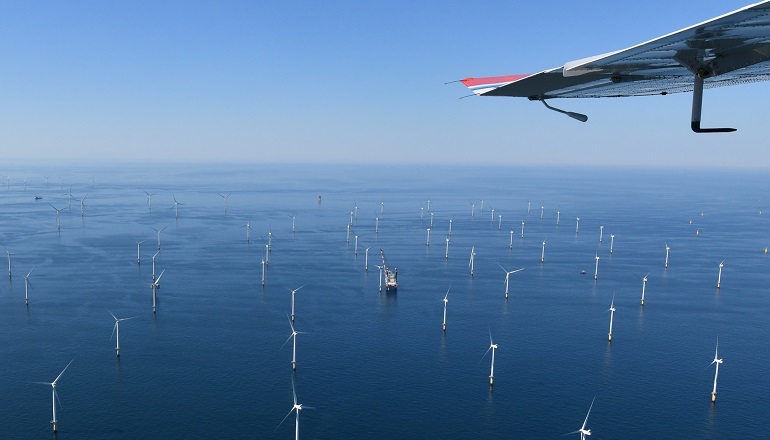
Belgian North Sea wind farms accounted for 8.7% of Belgian electricity consumption in 2024, according to figures from the trade group Belgian Offshore Platform (BOP).
The nine wind farms had a total production of approximately 7.07 TWh, or roughly the annual electricity needs of 2m families.
Belgium’s offshore wind farms have a total capacity of 2.26GW, and the country is ranked fifth in Europe behind the United Kingdom (14.8 GW), Germany (8.85 GW), the Netherlands (4.7 GW) and Denmark (2.7 GW).
While 2024 got off to a good start for the wind farms, the wind was below average in the summer and autumn, resulting in a total production below 2023 when the wind farms contributed 8 TWh.
BOP pointed to three new wind farms in the Princess Elisabeth development zone, poised to bring the Belgian offshore wind production to 5.8GW.
The public tender for the first 700MW opened in November, and the winner is expected to be announced at the end of 2025.
The wind farm will have to be built before the end of 2030.
BOP did outline a number of challenges still facing the sector, however.
Any additional developments at sea will depend on two network investments, BOP said.
Belgian transmission system operator Elia does not yet have a permit for its Ventilus high-voltage connection, effectively blocking the transmission of any electricity from Belgian wind farms.
The uncertainty leaves offshore wind developers in the dark about when new wind farms will be able to feed electricity into the grid, despite the construction timelines established in the tender.
Another problem is the slow progress of Elia’s Boucle du Hainaut network reinforcement project.
The TSO’s current solution, BOP said, is a flexible connection allowing the disconnection of wind farms without compensation.
The strategy is an “unacceptable and illogical” transfer of operating risk from the network manager to the wind farms, resulting in increased financial risk and rising electricity costs, BOP said.
The trade group called for the ipact of future grid tariff increases to be “neutralized” within the framework of the contracts for difference going forward.