


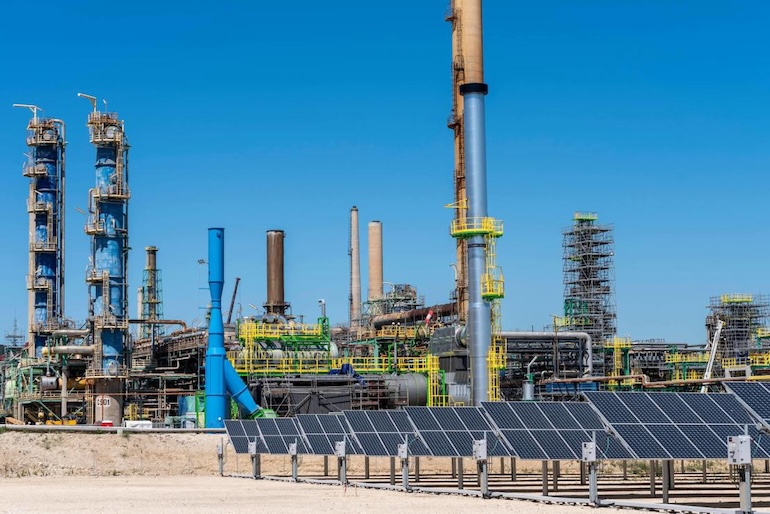
TotalEnergies is launching a green hydrogen production project with Air Liquide on the La Mède platform in Bouches-du-Rhône, France, as part of its ambition to decarbonise its European refineries by 2030.
The company said the scheme complements the Masshylia initiative for the production of renewable hydrogen by electrolysis led by TotalEnergies in partnership with Engie.
The projects will reduce CO2 emissions from the La Mède biorefinery by 130,000 tonnes per year, said the company.
Air Liquide will build and operate a renewable hydrogen production unit on the La Mède platform (pictured).
With a capacity of 25,000 tons of hydrogen per year, the unit will recycle co-products from TotalEnergies’ biorefinery.
The gas will then be used by the biorefinery to produce biodiesel and sustainable aviation fuels. The project represents a total investment of €150m for TotalEnergies and Air Liquide and is scheduled is scheduled to become operational in 2028.
“This new renewable hydrogen production project, carried out with Air Liquide, allows us to accelerate the decarbonisation of our La Mède platform,” said President of TotalEnergies’ Refining & Chemicals division Vincent Stoquart.
“Nearly 10 years after the announcement of its conversion, the La Mède platform is continuing its transformation and becoming a low-carbon hydrogen production centre, thus contributing to the decarbonisation objectives of the Provence-Alpes-Côte-D’Azur region.”
TotalEnergies is continuing to develop the Masshylia project in partnership with Engie. This is for the production of green hydrogen by water electrolysis with a capacity of 10,000 tons per year, in order to contribute to the decarbonisation of both the biorefinery and that of customers in the Fos-Berre industrial port area.
The two partners are aiming to start up the first 20MW electrolyser in 2029, subject to the confirmation of European and French subsidies and the necessary public authorisations.
TotalEnergies and the decarbonisation of its European refineries
TotalEnergies said it is committed to reducing its carbon footprint related to the production, transformation and supply of energy to its customers.
One of the levers identified by the company is the use of low-carbon hydrogen to decarbonise its European refineries, which should reduce its CO2 emissions by around three million tonnes per year by 2030.