


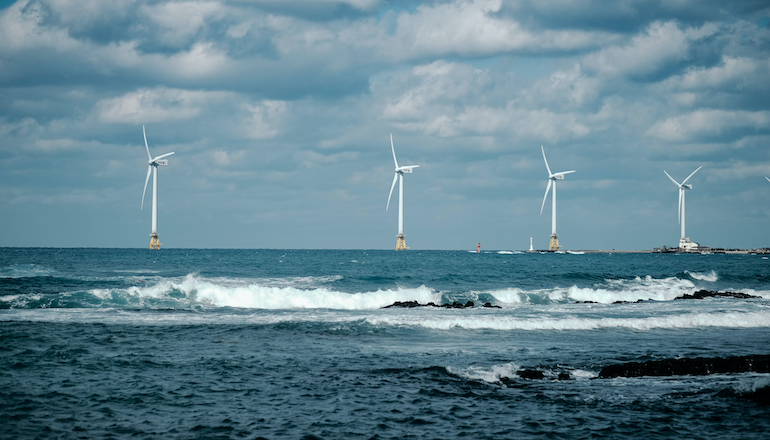
A new report by the joint UK government-industry Floating Offshore Wind Taskforce shows floating wind could be this century’s biggest British industrial success story – if the right measures are put in place to enable more projects to go ahead faster.
Floating Wind: Anchoring the next generation offshore says the UK’s engineering prowess and exceptional wind resources give the nation a head-start in the international race to build up a £1trillion global floating wind energy industry by 2050.
It states that the UK’s floating wind industry can employ 97,000 people by 2050, with many of the jobs based in Scottish and Welsh ports, contributing £47bn to the UK economy by building and supplying domestic projects as well as exporting cutting-edge technology worldwide.
The report finds that by 2050, floating turbines could provide a third of the UK’s offshore wind capacity with 40GW fully operational.
This would be enough to power every home in the country, even allowing for the expected rise in demand due to the electrification of home heating and charging more electric vehicles.
The report also shows the cost of building floating projects could fall by 30% by 2030 to under £100 per megawatt hour.
The UK already has two floating wind farms operating.
The report emphasises the importance of getting more test and demonstration projects up and running as fast as possible, scaling up rapidly to drive down costs through learning by experience, replicating the cost reduction experienced in fixed offshore wind.
The UK already has one of the largest floating project pipelines in the world, and is at a more advanced stage of development than any other country, with the seabed already leased for up to 24GW of capacity, according to the report.
However, it warns a lack of suitable ports to manufacture and assemble floating turbines, and strong competition from European suppliers, mean unless the development of the supply chain is prioritised, the UK risks missing out on the full economic potential of floating wind.
The report highlights the benefits of focusing on high-value parts of the floating wind supply chain, such as steel and concrete platforms, cables, moorings and anchors, in line with the Industrial Growth Plan for offshore wind.
Innovation can play a key role in cost reduction, for example by standardising the design of floating platforms and by using robotics such as drones to inspect projects.
The co-chair of the Floating Offshore Wind Taskforce, RenewableUK chief executive Dan McGrail, said: “As this report shows, floating wind is set to become one of the biggest global industries of the twenty-first century, and the UK now has an unprecedented opportunity to seize the lead by scaling up this innovative technology.
“But we have to act fast, with industry and government working closely together to transform ports around the country into centres of excellence where we can manufacture high-value components for floating turbines, especially in areas like the north east of Scotland and south Wales which need new industrial opportunities as we transition from fossil fuels to clean power.
“This will enable us to generate vast amounts of cheap electricity further out to sea where wind speeds are even higher, ensuring that costs plummet while boosting Britain’s energy security.”
Energy Secretary Ed Miliband said: “Floating offshore wind is at the heart of the government’s mission to make Britain a clean energy superpower.
“Great British Energy’s newly launched partnership with The Crown Estate will help achieve this, allowing us to seize on our unique opportunity to win the global race for floating offshore wind – with this report showing how much government and industry can achieve by working together.
“By leading the world in this cutting-edge technology, we can speed up the transition to clean energy and secure good jobs and economic growth for our industrial heartlands – all while ensuring the expertise of our North Sea workforce are the people who power this clean future.”
Industry co-chair of the Scottish Offshore Wind Energy Council Brian McFarlane welcomed the findings of the report.
He said: “Scotland is already playing a significant part in delivering this vision; key ports that will build and maintain floating offshore wind projects have been assessed and prioritised by the Strategic Investment Model.
“This collaborative effort from our SOWEC industry partners has laid the foundations to help grow Scotland’s supply chain, prioritise investments and speed up the delivery of floating offshore wind projects.
“This is a pivotal moment for Scotland, and we must remain focused on investment and collaboration across the industry and government to deliver clean energy for all through a stable and streamlined supply chain.”