


The Swedish project development company Landinfra Energy (Landinfra) is advancing its offshore wind power initiative by starting the consultation process for the Falkenberg-Halmstad project, located off the coast of Halland.
The planned wind farm is expected to consist of between 55 and 80 turbines, with an estimated production capacity of more than 5TWh of renewable electricity-exceeding the annual electricity consumption of Halland.
As part of the consultation process for the Falkenberg-Halmstad project, the formal permitting process also begins, with Landinfra continuing its dialogue with authorities and stakeholders to determine the best path forward for the project.
A key focus will be defining the scope of the studies and assessments required for the project’s environmental impact assessment and permitting process-a procedure expected to take up to three years.
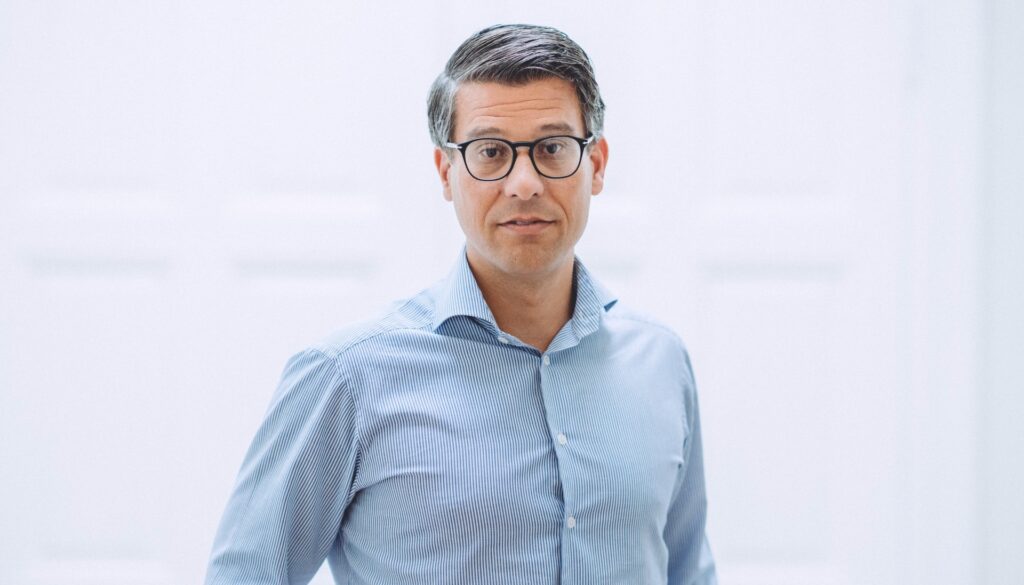
Marcus Landelin, chief executive and co-founder of Landinfra, (pictured) said: “Through dialogue with relevant authorities and stakeholders, we aim to ensure the best possible conditions for increased renewable electricity production in Sweden, supporting the green transition.”
To contribute to Sweden’s future electricity supply and competitiveness, Landinfra is developing sustainable and competitive renewable energy projects throughout the country.
The company manages a portfolio of offshore wind power projects within Swedish territorial waters and the Swedish exclusive economic zone.
Landelin added: “Our ambition is to realize as many of our offshore projects as possible. All of them are located in areas that the Swedish Energy Agency, along with eight other authorities, has identified as suitable for wind power.”
Aligned with its long-term goals, Landinfra focuses on projects that could be realized around 2030, both technically and economically.
Due to its location in relatively shallow waters close to shore, the Falkenberg-Halmstad project allows for the use of bottom-fixed foundations and allows for a reasonable cost for grid connection, Landinfra said.
With a potential annual electricity production of more than 5TWh, the project could significantly contribute to industrial electrification in Halland County and create opportunities for the establishment of new energy-intensive industries, it added.
The Swedish government’s budget proposal also introduced a model where municipalities hosting wind farms receive financial support equivalent to the taxes generated by the wind power.
In parallel with the Falkenberg-Halmstad project, Landinfra continues its work on its other offshore wind power projects, which are focused on criteria such as social benefit, proximity to grid connections, local electricity consumption, reasonable investment costs, and the potential to keep production costs low.
Landinfra’s portfolio is estimated to have a total potential capacity of around 6GW installed, which would add approximately 26-29TWh to Sweden’s expansion of fossil-free electricity production and energy transition.