


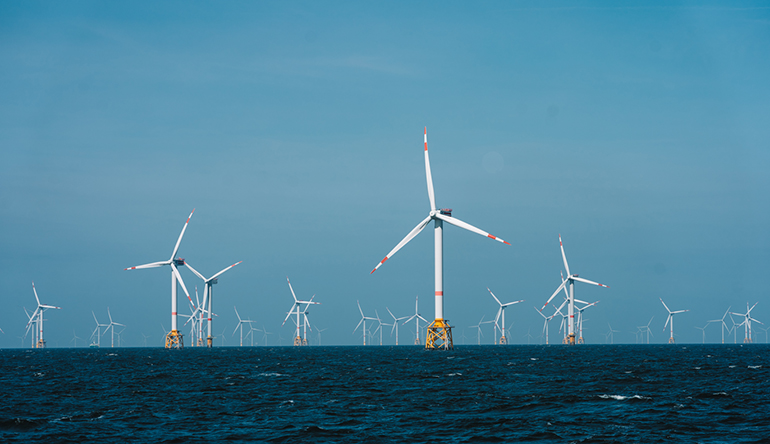
The European Commission has approved Belgium’s state aid mechanism, paving the way for the auction of the first 700MW wind farm in the Princess Elisabeth Zone.
This tender, planned to be launched on 28 October, marks a crucial step in Belgium’s journey towards energy independence and climate neutrality, said the country’s Minister of Energy Tinne Van der Straeten.
By 2030, thanks to the new Princess Elisabeth Zone, North Sea wind farms will generate enough electricity to power every Belgian household, she added.
The country is set to triple its offshore wind capacity, paving the way for 100% green electricity from the North Sea for every household by 2030.
The process will start on 28 October 2024 with an auction for the first 700MW wind farm, which is expected to be operational by the end of 2028. This tender has now been approved by the European Commission.
For the first time, citizen participation will be a mandatory criterion, ensuring Belgians benefit directly from the transition through investment returns via renewable energy communities, said Van der Straeten. In addition, a maximum strike price cap of €95 per MWh will be enforced to ensure the cost to society is as low as possible.
Projects above this threshold will not be considered.
“Locally produced, affordable renewable energy is not only the future of our energy model-it is the strongest shield against extreme price volatility and a vital weapon in the fight against climate change,” said Van der Straeten.
She added: “With this European Commission’s approval, Belgium is set to make a significant leap in its energy transition, promoting a more sustainable and inclusive energy future.
“This is the first time that citizen participation is a mandatory requirement for an offshore wind tender.
“By involving citizens in renewable energy communities, we ensure they directly benefit from investment returns.
“This makes our energy transition fairer, more inclusive, and more sustainable. Belgium is proud to be leading the way, and I hope this model will inspire similar initiatives across Europe.”
The Princess Elisabeth Energy Island will play a key role in the development of Belgium’s second offshore wind zone.
As the world’s first artificial energy island, located 45km off the Belgian coast, it will not only connect offshore wind farms to the mainland, but also serve as a landing point for future hybrid interconnectors.
It is expected to be built by 2026 and connected to the grid by 2028, with the first turbines operational by then.
The energy island will act as an extension of the North Sea grid, facilitating new connections with offshore wind farms in neighbouring North Sea countries such as the UK, Ireland and Norway, further enhancing cross-border energy cooperation and strengthening Belgium’s renewable energy network.
Key criteria for the auction
The Princess Elisabeth Zone is central to Belgium’s ambitious climate goals, said the government, and the auction criteria are designed to ensure sustainability, affordability, and inclusive participation.
They are:
Green electricity for all Belgian households: The Princess Elisabeth Zone will enable all Belgian households to get all their electricity entirely from renewable energy produced in the North Sea, covering 30% of Belgium’s total electricity demand.
Sustainability: Projects must adopt sustainable working practices and use the best available techniques and materials, reflecting the innovations of Belgium’s pioneering energy island.
Investment security: A capability based two-sided Contract for Difference mechanism guarantees stable returns for investors while making excessive profits impossible.
Price stability for industry and citizens: Long-term Power Purchase Agreements (PPAs) with stable prices will ensure that Belgian industry and citizens benefit from predictable and affordable renewable energy, while reducing their dependence on fossil fuels.