


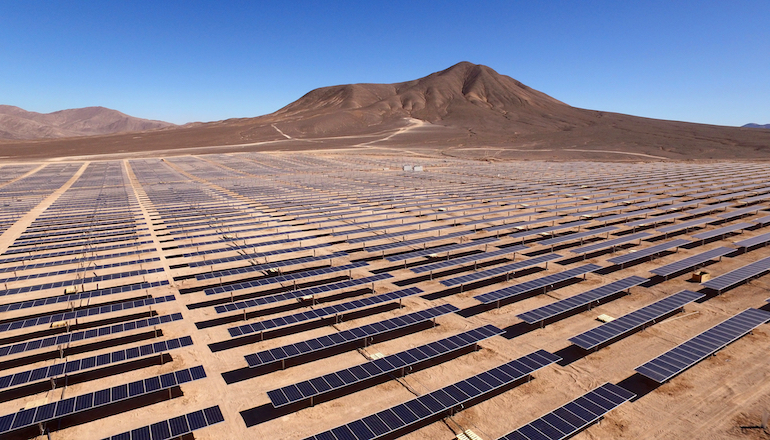
The combined capacities of solar and wind now constitute more than one-fifth of the total available installed utility-scale generating capacity in the US.
A review by the SUN DAY Campaign of data just released by the Federal Energy Regulatory Commission (FERC) reveals that the mix of renewable energy sources, which includes biomass, geothermal and hydropower, as well as solar and wind is now nearly 30% of total US electrical generating capacity.
Moreover, for the ninth month in a row, solar was the largest source of new capacity and is on track to become the nation’s second-largest source of capacity – behind only natural gas – within three years.
In its latest monthly “Energy Infrastructure Update” FERC recorded 50 units of solar totalling 2517MW placed into service in May along with two units each of wind (277MW) and hydropower (211MW).
Combined they accounted for 94.23% of all new generating capacity added during the month, while natural gas provided the balance of 184MW.
For the first five months of 2024, solar and wind added 10,669MW and 2095MW respectively.
Combined with 212MW of hydropower and 3MW of biomass, renewables year-to-date (YTD) were 89.91% of capacity added.
The new solar capacity added from January through May this year was more than double the solar capacity (4,885MW) added during the same period last year.
Installed utility-scale solar has now moved into fourth place – behind natural gas (43.38%), coal (15.79%) and wind – for its share of generating capacity after having recently surpassed that of nuclear power (8.05%).
FERC reports that net “high probability” additions of solar between June 2024 and May 2027 total 89,852MW – an amount almost four times the forecast net “high probability” additions for wind (23,449MW), the second fastest growing resource.
“Step-by-step, installed solar capacity is surpassing all other energy sources,” said SUN DAY Campaign’s executive director Ken Bossong.
He added: “It has now advanced to fourth place and should be in second within a few years, with wind not far behind.”