


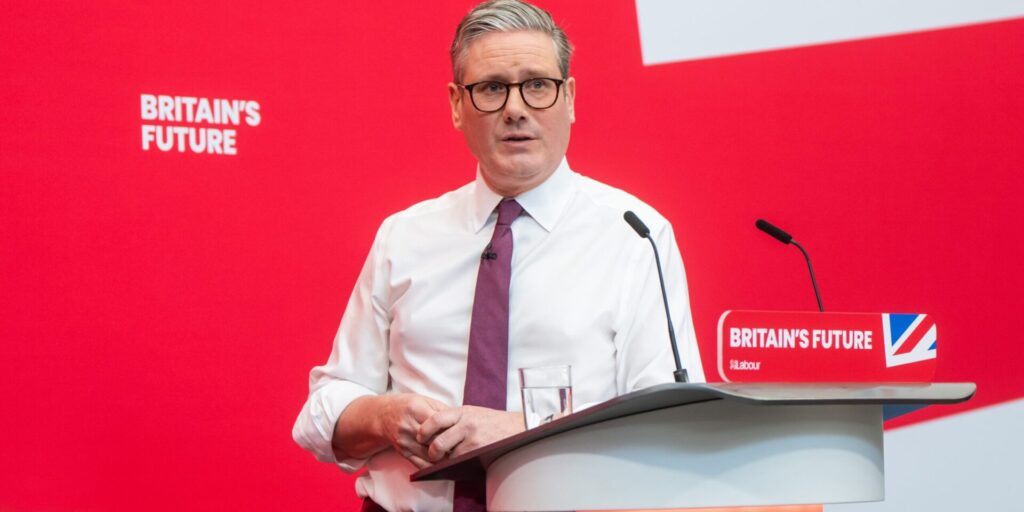
Labour leader Keir Starmer has outlined further details of his plans for Great British Energy, a publicly owned energy company that will develop renewables projects.
Launching the logo and website for Great British Energy, Starmer vowed that if a Labour government is elected on July 4, it will get working within months to build clean power across the United Kingdom.
Headquartered in Scotland, Great British Energy’s early investments will include wind and solar projects in communities up and down the country as well as making Scotland a world-leader in cutting edge technologies such as floating offshore wind, hydrogen, and CCS, according to the party.
It will be funded by asking the big oil and gas companies to “pay their fair share” through a proper windfall tax, so the proceeds can be invested in the future of the country, said Labour.
Speaking at the launch in Scotland, Starmer will set out Labour’s plan to invest in homegrown power, saying that “family financial security depends on energy security”.
Starmer said: “Family financial security depends on energy security.
“The pain and misery of the cost of living crisis was directly caused by the Tories’ failure to make Britain resilient, leaving us at the mercy of fossil fuel markets controlled by dictators like Putin.
“It doesn’t have to be this way. Our clean power mission with Great British Energy will take back control of our destiny and invest in cheap, clean homegrown energy that we control.
“We will turn the page on the cost of living crisis. The choice at this election is clear: higher bills and energy insecurity with the Conservatives, or lower bills and energy security with Labour.”
Ed Miliband, Labour’s Energy Security and Net Zero Secretary, said: “Great British Energy will kickstart our mission for clean power to lower bills and boost our energy independence.
“It’s time to move on from the Tories’ bone-headed opposition to clean energy, for which British families are paying the price.
“The choice at this General election is clear: higher bills and energy insecurity with the Conservatives, or lower bills and energy independence with Labour.”