


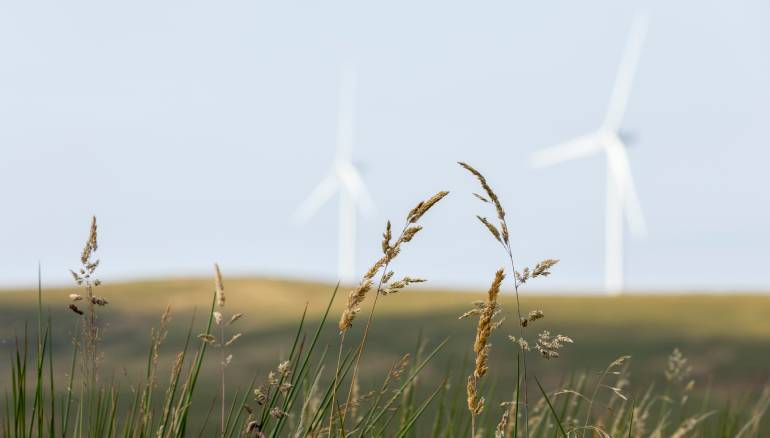
RES, the company behind the five-turbine Cairnmore Hill wind farm proposal, has submitted a new Biodiversity Enhancement Management Plan (BEMP) to accompany its planning application.
The biodiversity enriching plan includes measures to enhance 56 hectares of wet heath habitat, plant 5.5 hectares of broadleaved woodland, create 4.5 hectares of species-rich scrub as well as the planting of over 2300m of species-rich hedgerows.
The proposed wind farm is located in an area identified by the Highland Council as having ‘potential for wind farm development’ and is currently used for grazing sheep.
RES has said the measures at Cairnmore Hill would improve local flora and fauna during the site’s operational life with the bespoke BEMP calculating a 16% Biodiversity Net Gain (BNG), as a direct result of the wind farm being built.
A Biodiversity Management Group (BMG) would be established to oversee and monitor the implementation of the agreed BEMP and is likely to include representatives from The Highland Council and NatureScot.
Euan Hogg, RES Development Project Manager, explained: “There’s currently a range of pressures being exerted on Scotland’s natural environment, including the direct impacts of human induced climate change, and it’s so important that we take measures to enhance our precious biodiversity, wherever we can. Cairnmore Hill offers a fantastic opportunity to do just that with a range of habitat improvements proposed to support a richer and more diverse mix of species on-site.
“The enhancement and restoration proposed could help improve the breeding, wintering and foraging habitats for a whole range of species, including waders and increase the floral species diversity. The turbines producing clean electricity on-site would also work hand in hand with the carbon-absorbing wet heath, helping to mitigate the effects of climate change.”