


Germany’s installed capacity of renewable energy increased by 17GW to a total capacity of almost 170GW in 2023.
According to statistics from the Federal Network Agency, this represents an increase of 12% compared to 2022.
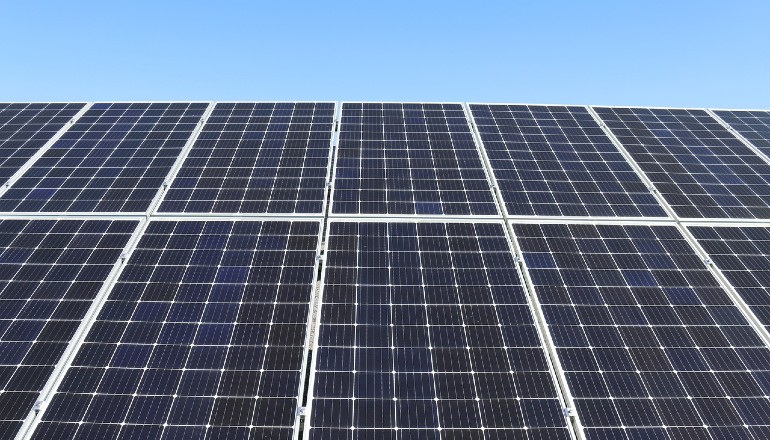
Solar capacity additions in 2023 hit 14.1GW, double that added in 2022, largely driven by private investments. The most solar capacity was installed in Bavaria in 2023 with 3.5GW.
At the end of 2023, the total installed capacity in Germany was 81.7GW. This means that 19GW will have to be added annually in the future in order to achieve the expansion target of 215GW for solar in 2030.
Germany also added 2.9GW of onshore wind in 2023, more than the previous year. The total installed capacity at the end of 2023 was 60.9GW.
By 2030, the installed capacity is expected to increase to 115GW. In order to achieve this goal, 7.7GW must be added in Germany every year.
In 2023, most of the wind turbines in Schleswig-Holstein (1.1GW) went into operation.
The year also saw 80% more permits were issued for onshore wind turbines than in the previous year. These were announced for around 8GW and are expected to be realised in the coming years.
In addition, the Arcadis Ost I offshore wind farm in the Baltic Sea added 300MW of capacity. This means that roughly the same amount of wind power was added at sea in 2023 as in the previous year.
A total of 8.5GW of power is installed in the Baltic and North Seas.
“We have taken a big step forward, especially when it comes to adding photovoltaic systems. The expansion output has almost doubled compared to the previous year. These investments are further advancing the energy transition – last year, for the first time, Germany generated more than half of its electricity from renewable energies,” says Klaus Muller, President of the Federal Network Agency.
“When it comes to onshore wind, we are not yet where we want to be. What makes me optimistic is that significantly more permits will be issued in 2023. This will pay off in increasing numbers of new additions.”