


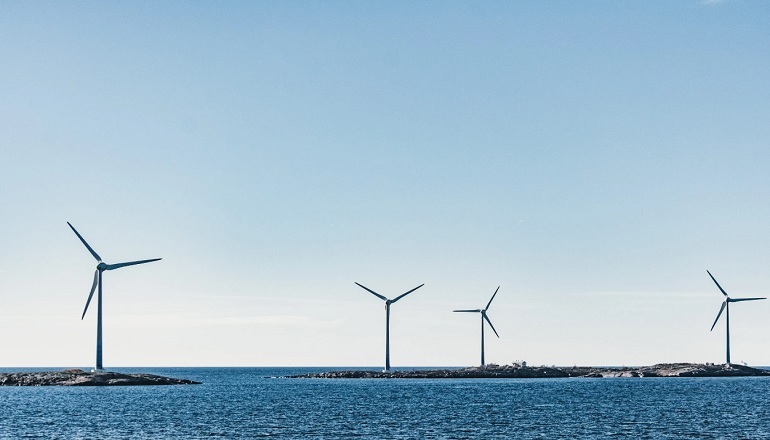
Freja Offshore has submitted a planning application for the up-to 2500MW Dyning floating offshore wind farm in the Baltic Sea, located in Sweden’s economic zone.
The application to build and operate the project has been submitted to the Ministry of Climate and Economic Affairs in accordance with the law governing Sweden’s economic zone and the establishment of the internal cable network under the Swedish Continental Shelf Act.
The government will now consider Freja Offshore’s application and gather input from several agencies in a consultation round before making a decision.
The project, located south-east of Oxelösund, will supply more than the total electricity consumption of the entire Sörmland and Östergötland regions.
The former’s electricity consumption is projected to double in the next 20 years, with a significant portion of the increase attributed to electrification of the industrial sector.
Östergötland is also facing an expected rise in electricity consumption.
Freja Offshore said Dyning has the potential to contribute to lower electricity prices for households and businesses in the region, while remaining far enough offshore to ensure low to no visibility from land.
The northern tip of the park is situated 45km south-east of Oxelösund, the southern tip is 40km east of the outermost islands in Gryts Archipelago and the park’s eastern boundary is approximately 50km from Gotland.
“Sörmland and Östergötland are in great need of increased electricity production to reduce prices and meet the electricity demands of transitioning to low-carbon industry,” said Freja Offshore chief executive Magnus Hallman.
“In addition, our intention is to develop our proposed offshore wind farm in coexistence with the beautiful and culturally significant archipelago environments in the area, choosing a site that has low to no visibility from land.”