


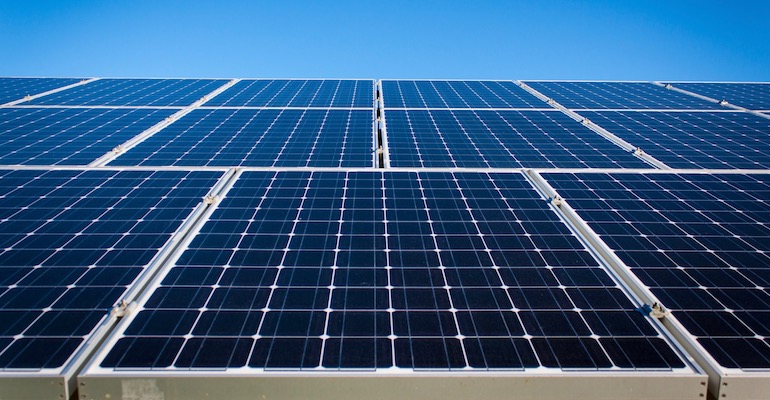
Israel’s inter-ministerial tender committee for solar energy projects has published the tender documents for the construction of a PV power station with a capacity of up to 100MW to be built near its existing Ashlim energy farm.
The site in the Negev Desert will be built in cooperation with the private sector using the PPP (Public Private Partnership) method for financing, planning, construction, and operation by the concessionaire who will win the tender for a period of 25 years, at the end of which he will transfer the power station back to the state.
The establishment of the power plant will help to meet the goals set by the government to the extent of 30% electricity production from renewable energies by the year 2030 and to reduce the country’s total emissions.
The move follows Government Resolution No465 of October 2020, which defined the need to establish an additional production supplier from renewable energies. The nine teams that passed the threshold conditions in the early selection stage of the tender will be able to compete in the process.
The project is added to a series of PPP projects shared by the public and private sectors for the construction of a renewable energy power plant promoted by the accountant general in collaboration with the inter-ministerial teams. The sites include two thermo-solar power plants and two PV power plants which already supply more than 300MW to the electricity transmission network.
After the establishment of the PV3 project, the five projects in the Ashlim area are expected to provide more than 400MW of renewable energy.
The tender was published by the inter-ministerial tender committee for solar energy projects, which is jointly run with the ministries of finance, energy and infrastructure, the electricity authority and the government company Inbal, headed by Amit Marzai, manager of the infrastructure and PPP projects unit in the accountant general’s department.
“Another solar power plant in Ashlim will bring the State of Israel another step closer to realizing the government’s goals for producing electricity from renewable energy and reducing air pollution and emissions from conventional power plants,” said director general of the Ministry of Energy and Infrastructure Kobi Blitstein.
“These days we, at the Ministry of Energy and Infrastructure, continue to work to remove barriers and open the electricity network so that a massive absorption of renewable energy will be possible throughout the country in the immediate time frame.
“The mobilization of all government ministries relevant to the field of renewable energy, as was done in the tender committee of this project, is necessary in order to bring about the significant change for the better in the energy economy.”
Accountant general Yehli Rotenberg said: “Like other countries in the world, the Israeli economy is also facing the challenges of increasing demand for electricity, alongside the pursuit of reducing emissions and meeting the government’s goals for renewable energies.
“Israel has a high potential for generating electricity from solar energy on a significant scale, and we must exhaust it with determination and consistency by promoting significant projects such as this.
“I welcome the announcement of the tender, which is another step on the way to achieving the government’s goals. We will continue to promote renewable energy projects using the PPP method together with the Ministry of Energy and the Electricity Authority, and all the partners who help promote these important projects to bring the maximum value for electricity consumers and the economy.”
Chairman of the Electricity Authority Amir Shavit added: “The establishment of the facility, which is expected to operate commercially in the first quarter of 2027, is an important landmark in promoting the production of electricity from renewable and green energies, and joins the four renewable energy projects in the Ashlim area that are already operating commercially.
“We are happy to see the interest of the local and international market players in this tender.
“The Electricity Authority will continue to promote the establishment of clean electricity generation facilities in a competitive manner for the benefit of the public and the electricity sector, and in accordance with the government’s goals.”