


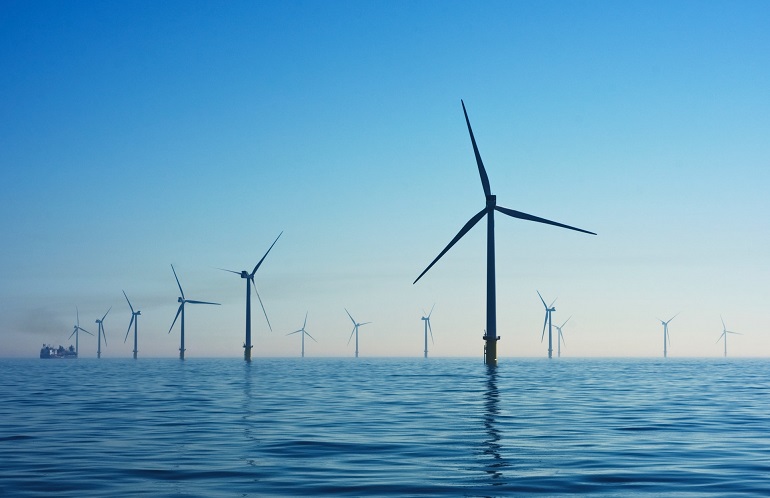
The National Energy Regulatory Council (NERC) has temporarily suspended procedures for Lithuania’s second 700MW offshore wind farm development tender.
The decision was made at today’s council meeting in response to last week’s government resolution to temporarily halt the tender procedures and resume them on 6 October.
Following the renewal of the tender, documents can be submitted until and including 7 October, for a total of two days.
The deadline for bidders had originally been scheduled for today (8 September).
The Lithuanian government said the temporary suspension of the tender is necessary to ensure successful results.
In a statement, the government said: “The decision was made taking into account the fact that the tender took place during the summer period, when market participants are objectively less active.
“Political processes taking place during the summer also influenced investors’ decisions to participate in the tender and invest in Lithuania.
“The Ministry of Energy received indications from potential participants that the current deadline for submitting documents was too short to properly prepare for participation in the tender, including detailed financial, technical, and legal assessments.
“These changes will create more favourable conditions for greater involvement of market participants.”
According to the Law on Renewable Energy, the government decides on the organisation of this tender and sets its dates, while NERC implements the provisions of this law.
NERC announced the renewed offshore wind farm development tender on 9 June and is responsible for organising the tender and selecting the winning bidder.
The tender committee consists of two representatives from NERC and one representative each delegated by the Ministry of Energy, the Competition Council, the Lithuanian Energy Agency, as well as Vilnius University and Kaunas University of Technology.
The offshore wind farm project will be developed in an area of approximately 136-square kilometres, located about 30km from the shore.
It is estimated that offshore wind farms will cover up to half of Lithuania’s electricity demand and reduce the country’s dependence on electricity imports.