


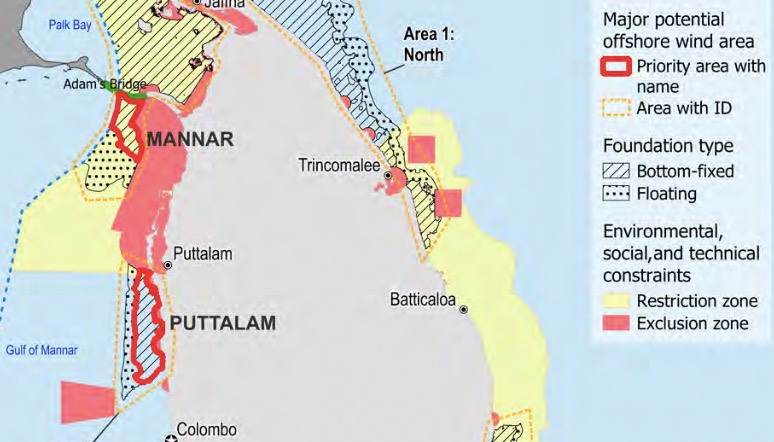
Sri Lanka has the locational potential for estimated 56GW of offshore wind, according to a new report published by the World Bank.
Its Offshore Wind Roadmap for Sri Lanka down the potential for 27GW of fixed offshore wind in shallow waters (less than 50 metres) and 29GW of floating offshore wind in deeper waters (between 50 and 1,000 metres).
There are three broad areas suitable for offshore wind development, but the western and southern coasts have the most energetic wind speeds and suitable technical conditions, according to the report, which was commissioned by the country.
The Government of Sri Lanka has set a goal to have 70% of its electricity generated by renewable energy sources by 2030, and achieve carbon neutrality in electricity generation by 2050.
Sri Lanka has significant potential for offshore wind, and there is already private sector interest in developing projects, according to the roadmap.
The additional clean energy capacity that could be generated by offshore wind can not only support the country’s transition to net zero carbon, but also increase security of supply and help reduce the economic burden from fossil fuel imports, it found.
To fully assess the country’s offshore wind potential, the report has been published by the World Bank Group under its Offshore Wind Development Program.
It provides a full overview of potential low and high growth scenarios for offshore wind development in the country, as well as a series of recommendations for the government to take in order to realise these scenarios.
The objective of this roadmap is to provide strategic analysis and advice on the role that offshore wind can play in Sri Lanka’s future energy mix, analysis on the key opportunities and challenges, and recommendations on next steps in terms of policy formulation, planning, and developing bankable projects.