


WindEurope has declared support for the EU’s aim of restoring 30% of degraded areas across the bloc.
The trade group said 30% nature restoration does not undermine the EU’s climate and energy targets.
With its Nature Restoration Law the EU is planning new legislation to restore Europe’s natural ecosystems.
The European Commission has proposed binding restoration targets for specific habitats and species.
It aims to restore 30% of the EU’s degraded areas, and ultimately all ecosystems in need of restoration by 2050.
The Nature Restoration Law is a central element of the EU’s Green Deal, and the Commission’s proposal must not be watered down or delayed, said WindEurope.
Certain political groups in the European Parliament such as the European People’s Party (EPP) have recently suggested that nature restoration and the energy transition were incompatible.
The EPP used this argument to justify its rejection of the proposed nature restoration law in the European Parliament’s AGRI and PECHE Committees.
Climate protection is critical to biodiversity protection.
The WWF describes biodiversity loss and climate change as “two sides of the same coin”.
The wind industry is working to mitigate its impact on nature and biodiversity and to accentuate its potentially positive impacts.
It avoids building wind farms during bird nesting seasons or along major migratory routes and it reduces noise pollution for marine life when installing offshore wind farms by using air bubble curtains and hydro sound dampers.
“We work closely with local authorities and bird specialists to improve the knowledge about the most vulnerable species.
“We prevent and reduce the impact of wind farms on these species through good planning and siting.
“Where appropriate, we use decoy systems or equip our wind turbines with radar-based detection systems that stop the rotor from spinning when birds or bats fly close to it.
“The industry is conducting detailed studies to understand our impact on local biodiversity such as birds and fish stocks,” stated WindEurope.
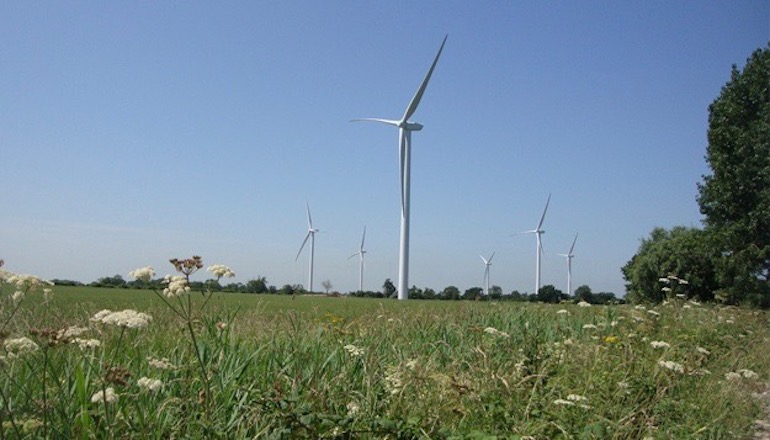
Wind farms can also have positive effects on local biodiversity by helping to preserve habitats and ecosystems.
Once wind farms have been built their sites are left largely undisturbed for many years.
In offshore wind farms bottom trawling and dredging cannot take place, which helps the seabed to regenerate and fish stocks to recover, aided by the growth of molluscs on the turbine foundations.
Through targeted compensation measures wind farm operators often create new and improved biotopes for local flora and fauna.
Wind farm developers are actively working with NGOs to find ways of accentuating these positive biodiversity impacts.
For example, Orsted has teamed up with WWF Denmark to explore how artificial reefs can help protect endangered oyster species.
With the Dutch North Seas Foundation the wind industry is also farming oysters in wind farms.