


Indonesia has a viable path to reaching its target of net zero emissions by 2060, but needs a sustained policy effort on renewables, according to an International Energy Agency (IEA) report.
The IEA report stresses that the technologies Indonesia needs for the initial steps in its journey to net zero – such as energy efficiency solutions, solar, wind and electric vehicles – are already commercially available today and cost-effective, provided that the right policies are put in place.
Driving rapid expansion of renewables, especially solar, demands an “immediate and sustained policy push”, the IEA stated.
Solar projects in Indonesia are currently more than twice as costly as those in similar emerging market countries, while costs can be brought down by introducing transparent and competitive tariffs and a predictable project pipeline.
At the same time, by allowing coal plants to operate more flexibly and remunerating them for it, Indonesia can reduce power system costs by more than 5% and help free up the space in the power system that needs to go to renewables.
To achieve net zero by 2060, Indonesia will need to almost triple energy investment by 2030 from today’s level.
That means an extra $8bn in investment a year by the end of this decade compared with the level in a business-as-usual pathway, the report found.
The IEA’s Energy Sector Roadmap to Net Zero Emissions in Indonesia is a collaborative project undertaken with the Indonesian Ministry of Energy and Mineral Resources (MEMR) at the request of the Government of Indonesia.
It was launched at the G20 Energy Transitions Ministerial Meeting in Bali under Indonesia’s first G20 Presidency.
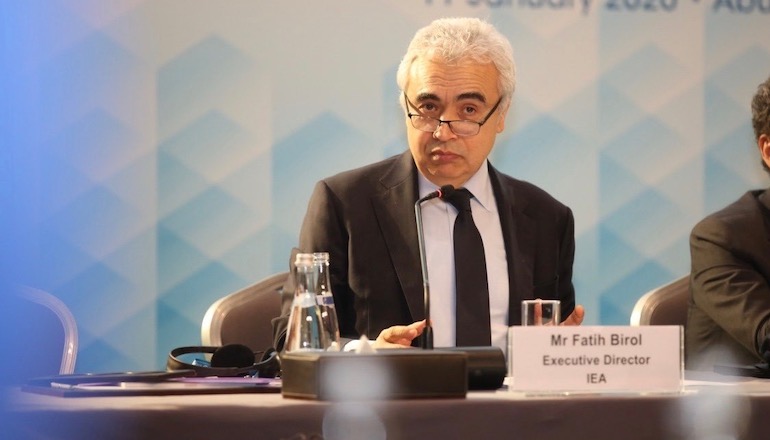
IEA Executive Director Fatih Birol (pictured) and Indonesia’s Minister of Energy and Mineral Resources Arifin Tasrif also signed a Joint High-Level Statement that sets out a shared vision of Indonesia’s path to net zero, drawing on the roadmap’s findings.
The IEA Roadmap shows that by reaching net zero by 2060, Indonesia would reduce total household energy bills as a share of income from today’s level.
“Indonesia has the opportunity to show the world that even for a country that relies heavily on fossil fuel exports, a pathway to net zero emissions is not only feasible but also beneficial,” said Birol.
“We must be clear-eyed about the challenges, especially in areas that depend on the coal industry, but the economic opportunities more than compensate for the costs.”