


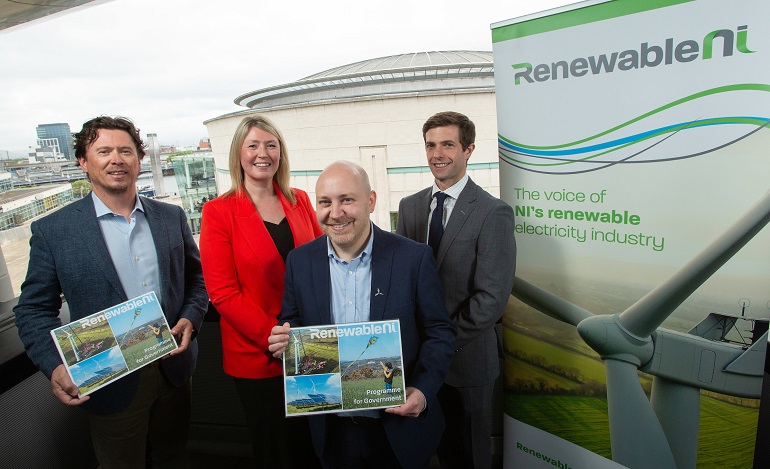
RenewableNI is lobbying the Northern Ireland government to take steps to accelerate the planning process for clean energy projects.
Representatives of the trade group met with newly elected Members of the Legislative Assembly in Belfast today (29 June) to present their Programme for Government.
The document highlights the urgent need for “an efficient, effective planning system” to be put in place if the country’s target of 80% renewable electricity by 2030 is to be achieved.
Wind and solar farms can currently take up to 60 months to get through the Northern Irish planning and permitting process according to the report, jeopardising the delivery timeline for hitting the 2030 targets.
“We need to nearly double the renewable electricity capacity in that timeframe,” said Garth McGimpsey, RenewableNI chairman and RES senior project manager. “Projects need to be shovel ready by 2028, which is less than 6 years away.”
The consenting process for green infrastructure projects – including renewable developments and the associated grid upgrades – should be streamlined with the same urgency that was applied to the Covid response, the document urges.
It calls for a “statutory duty” for all local planning authorities to facilitate net-zero ambitions with a presumption in favour of renewable development, as well as the extension of the UK’s Contracts for Difference scheme to include Northern Ireland.
“As the only part of these islands without market support for renewables, coupled with the longest planning timelines, we remain at a competitive disadvantage,” the Programme sates. “We must overturn the policies that are driving away investors.”
Meanwhile, the Forest Service should make land available for renewable development, with around 500MW of new capacity capable of being installed on sites under the agency’s control according to the report.
Around 1.1GW of new onshore wind is targeted for the country, which research by consultancy KPMG estimates could deliver more than £3bn to the Northern Irish economy.
ABO Wind’s UK director Tamasin Fraser said: “Onshore wind has played a central role in achieving Northern Ireland’s renewable electricity targets to date.
“As the cheapest and easiest solution to deploy, it provides a huge opportunity to further decarbonise our society and attract investment while also creating an indigenous, secure and sustainable supply for the region.
“For these opportunities to be realised, it is essential that the issues around slow and inconsistent decision-making within the planning system are urgently addressed by the next NI Executive.”