


Orsted and other members of the SteelZero initiative have published policy guidelines to help governments speed up the transition to decarbonised steel.
SteelZero’s policy paper calls on governments to align on how to define emerging terminology and include independently verified definitions in public sector procurement criteria and grow demand through public procurement to implement 2030 and 2050 targets.
It also advocates for consistent methodologies for measuring and reporting on embodied carbon, among other proposals.
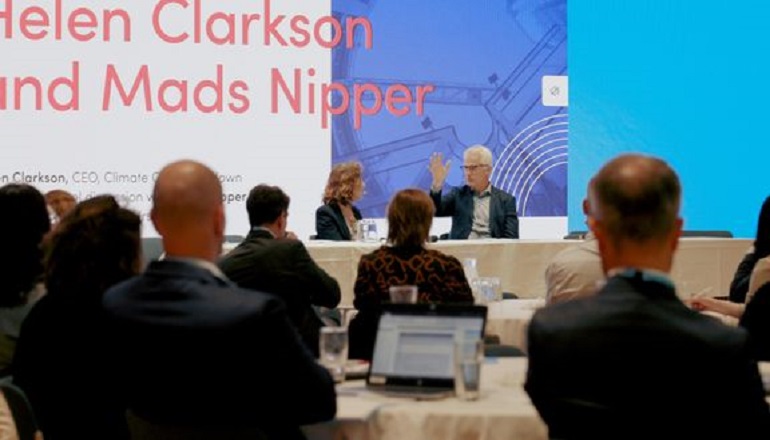
On 31 May, Orsted and Climate Group hosted the inaugural SteelZero summit, which explored policy solutions to decarbonise the steel sector, which represents 8% of global CO2 emissions, and grow the net zero carbon steel platform.
Hosted at Orsted’s headquarters in Copenhagen, Denmark, the summit was the first SteelZero event since the platform’s launch in 2020.
At the summit, members of the SteelZero platform agreed to continue to grow the demand-side action towards its 2030 and 2050 goals.
As part of the SteelZero platform, members make public commitments to procure 50% of their steel by 2030 from any combination of the following: a company with a validated science-based target, a site certified by ResponsibleSteel, or low-embodied carbon steel.
Orsted CEO Mads Nipper said: “I’m excited to see the launch of the SteelZero global policy principles paper. Governments now need to pull multiple levers to accelerate steel decarbonisation and must match policy action with growing demand-side ambition.
“This can help build access to a critical supply of green steel that allows companies to meet their climate goals in the coming decade.
“And it can help unlock future net zero supply chains in the renewable energy sector.
“At Orsted, we look forward to using our insights from the forefront of climate action to drive these collective efforts with SteelZero.”