


A primary school in Oxfordshire could pave the way to greater sustainability and cost-savings in schools nationwide thanks to an energy storage project onsite.
The trial brings together clean energy outfit Smarter Grid Solutions and the Low Carbon Hub, a pioneering community energy organisation, to explore ways to empower local communities to make the most out of the green transition.
Rose Hill Primary School, part of the River Learning Trust, in Oxfordshire is taking part in the trial that could have wide-reaching benefits for the education sector.
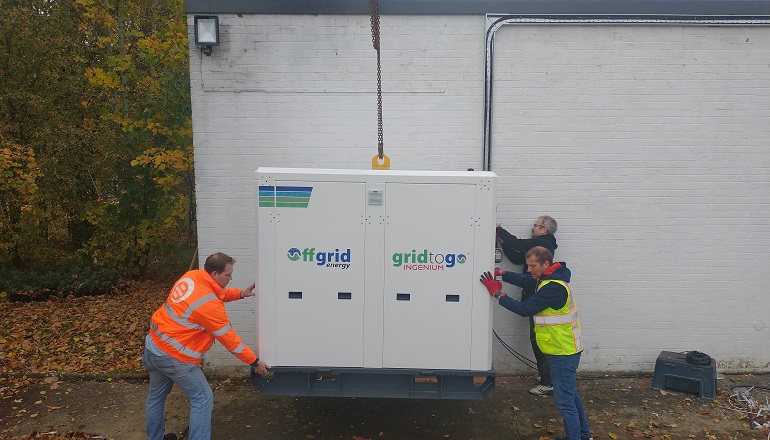
Firstly, a battery has been installed on site to store excess energy generated from the school’s solar panels, so that the school can run on clean energy during overcast or evening periods.
Secondly, a high-tech management platform, known as a distributed energy resources management system (DERMS), has been connected to monitor and manage the electricity generated and stored at the school.
This technology is most commonly used to monitor the output of larger-scale wind farms or solar PV farms.
The trial is testing how such technology can be used on a smaller scale, so that local organisations can access the benefits of renewable resources and the green energy transition.
It’s one of several initiatives that together form Project LEO (Local Energy Oxfordshire), one of the UK’s most ambitious and innovative energy trials.
The school’s solar panels were installed in 2016 by the Low Carbon Hub, but the extra electricity generated during school holidays or sunny times of the year has never been captured. The panels can generate a maximum of 28kW.
The school has saved hundreds of pounds on electricity bills each year, with around 30% of its electricity being provided by the panels.
The new battery has the capacity to store up to 50kWh, enough to power the school for 12 hours and so can clock up more savings even when the sun isn’t out. Any excess solar that can’t be captured can be sold to the electricity grid. This generates additional revenue that the Low Carbon Hub pumps back into local community projects, such as providing grants, energy audits for community buildings and schools, and free practical support to low carbon community groups.
The trial’s objective is to provide real-time monitoring and control of renewable resources and batteries, exploring the potential for community organisations, schools, businesses, homes and other local buildings to generate and manage their own electricity and participate in grid flexibility services.
The Low Carbon Hub owns the renewable resources installed at Rose Hill, which is acting as a test bed to see how similar schemes could reduce bills and measure carbon savings for local energy users whilst generating revenue for the community.
Specialist software developed by energy tech company Smarter Grid Solutions has been deployed to monitor and manage the PV and battery.