


Grimsby, on the UK’s east coast, has been chosen as the location for an innovative electrolyser project for renewable hydrogen production.
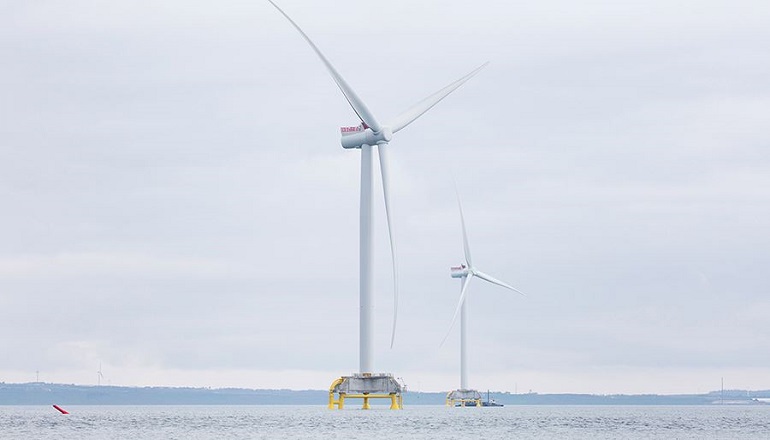
The Fuel Cells and Hydrogen Joint Undertaking (FCH JU) funded OYSTER project will develop and demonstrate an electrolyser system designed to be integrated with offshore wind turbines.
The project will also investigate the potential of using pipelines to transport green hydrogen.
Reaching the EU Hydrogen Strategy target of 40GW of electrolysers by 2030 is expected to require both onshore and offshore electrolysers.
The OYSTER project, being undertaken by a consortium of ITM Power, Orsted, Siemens Gamesa Renewable Energy, and Element Energy, will develop and test a megawatt-scale, fully “marinised” electrolyser in a shoreside pilot trial, which will be located in Grimsby.
The project will also explore the feasibility and potential of combining an offshore wind turbine directly with an electrolyser and transporting renewable hydrogen to shore.
FCH JU is 100% funding the project.
FCH JU is a public private partnership of the European Commission, who awarded the project €5m in January 2021.
The OYSTER consortium selected Grimsby because of the region’s strong connection to renewable energy, in particular offshore wind.
Grimsby is home to the O&M hub for Orsted’s UK east coast operations, including Hornsea 1 and Hornsea 2, which will be the world’s largest offshore wind farm when completed in 2022.
Both offshore wind farms use Siemens Gamesa turbines and are fitted with blades manufactured in Hull.
The Humber is also home to Gigastack which is developing a blueprint for the deployment of industrial-scale renewable hydrogen from offshore wind.
The Gigastack project is led by a separate consortium, consisting of ITM Power, Orsted, Element Energy and Phillips 66 Limited.
The OYSTER electrolyser system will be designed to be compact, to allow it to be integrated with a single offshore wind turbine, and to follow the turbine’s production profile.
The system will integrate desalination and water treatment processes, making it possible to use seawater as a feedstock for the electrolysis process.
ITM Power is responsible for the development of the electrolyser system and the electrolyser trials, while Orsted will lead the offshore deployment analysis, the feasibility study of future physical offshore electrolyser deployments, and support ITM Power in the design of the electrolyser system for marinisation and testing.
Siemens Gamesa Renewable Energy and Element Energy are providing technical and project management expertise.
Graham Cooley, CEO of ITM Power, said: “Renewable hydrogen is the cleanest fuel available to us today. Utilising offshore wind energy, and generating renewable hydrogen using water in the process of electrolysis, offers a route to be able to decarbonise the entire energy system.
“ITM Power is delighted to be supporting this move towards a greener, cleaner future.”