


UK Energy Department BEIS has provided nearly £30m (€33m) in funding for five hydrogen projects.
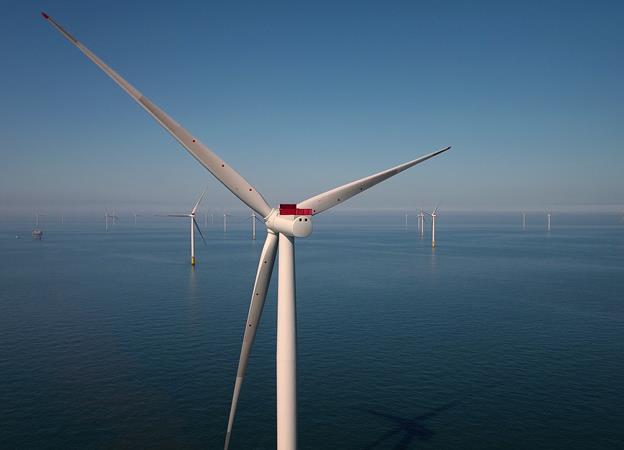
Two of the projects – Gigastack and Dolphyn – are focused on producing green hydrogen from offshore wind.
Dolphyn, led by Environmental Resources Management (ERM), has been awarded £3.12m, for developing its offshore electrolyser design further and getting the consent for a 2MW prototype facility.
The prototype is to be deployed either in Orkney or offshore Aberdeen and will produce hydrogen for local heating and transport applications.
ERM partner Kevin Kinsella told reNEWS: “We are aiming to get the prototype operating at location by end of 2023 with a full scale 10MW pre-commercial facility following soon after, in around 2026.
“The ultimate aim is to have large 4GW capacity hydrogen wind farms producing large quantities of green hydrogen that can be replicated across the North Sea and other deep water areas off the UK, including offshore south Wales and Cornwall.”
In addition to the UK, the technology will have application to other European countries and further afield, said Kinsella.
Kinsella said the Dolphyn project’s design is a floating offshore platform that has no electrical connection to shore but generates hydrogen from wind power and seawater and transports it back by pipeline.
“It is therefore able to access vast areas of the North Sea and other UK deep waters, unsuitable for fixed installations, where over 80% of the UK’s offshore wind resources reside,” he said.
Phase two of the £7.5m Gigastack project, comprising partners Orsted, ITM Power, Phillips 66 and Element Energy, will conduct a front-end engineering design study on a 100MW electrolyser system using staged installations with a nominal capacity of 20MW as part of the phase.
Gigastack’s FEED study will detail the actual design of a hydrogen production system connected to a wind farm and industrial off-taker using ITM Power’s electrolyser stack technology, electricity from the Hornsea 2 offshore wind farm.
The resulting renewable hydrogen will supplied to an industrial off-taker, Phillips 66’s Humber Refinery.
Referring to Gigastack, RenewableUK policy and regulation head Rebecca Williams said: “Green hydrogen has the potential to be a gamechanger in the energy sector, accelerating the transition to net zero emissions.
“This is a ground-breaking project, with what will be the world’s largest offshore wind farm set to provide renewable electricity to make green hydrogen, which can be stored to make our power system more flexible, or used as a clean fuel for transport, industry and heating.
“The UK is a global leader in renewables and innovative technologies like green hydrogen will grow our low carbon industrial base, creating thousands of green collar jobs, including opportunities for workers to make the transition from fossil fuels into the renewable energy sector, and export opportunities worldwide”.
A “key objective” of the Gigastack project is to “identify and highlight” regulatory, commercial and technical challenges for real applications of industrial-scale renewable hydrogen systems, said the partners.
As part of the second phase, ITM Power will also install and trial both their next-generation electrolyser stack and the semi-automated manufacturing machines required for large-scale and high-volume manufacture of these new large low-cost stacks.
“This will help validate a complete production system capable of delivering hundreds of megawatts of electrolysers per year,” added the consortium.
Initial feasibility of the Gigastack project, which finished in 2019, involved ITM Power designing a low-cost modular 5MW electrolyser ‘stack’, collaborating with Orsted to understand the potential synergies with offshore wind farms and with Element Energy to undertake a market analysis and explore business models for the first industrial-scale 100MW electrolysers.
Orsted hydrogen vice president Anders Christian Nordstrom said: “Creating renewable hydrogen with offshore wind really has the potential to decarbonise industrial processes, and what is needed now is to scale up the electrolyser technology and bring the cost down. We’ve seen this happen in offshore wind.
“With industry and government working together, there has been a rapid deployment and a huge cost reduction. This project aims to do the same with hydrogen. At the right cost, this technology has the potential to play a huge role in meeting the UK’s decarbonisation targets.”