


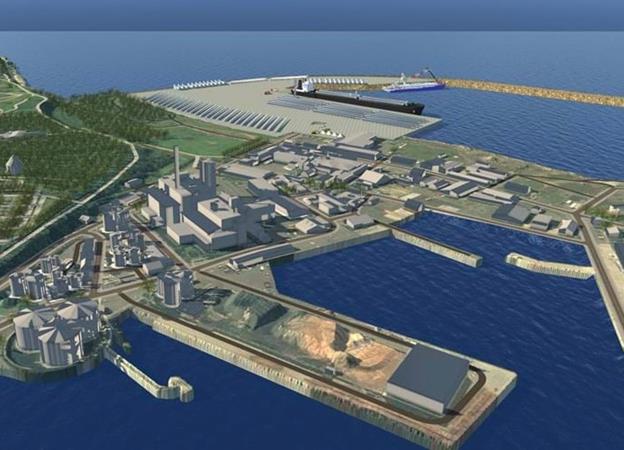
Europe needs to invest over €6bn on its ports now just to deliver the offshore wind expansion planned for 2030, a new WindEurope report finds.
To deliver the offshore wind expansion set out in the EU’s Offshore Renewable Energy Strategy, Europe’s ports must expand and add new infrastructure, the report said.
The European Commission should develop a Ports Strategy and recognise the societal and ecological value of ports, it added.
Ports are central to offshore wind as all the turbines and equipment are transported through them, the report stated.
They are the base for the operation and maintenance of offshore wind farms and a magnet for much of the supply chain, it said.
Ports will also be a hub for the production and transport of renewable hydrogen from offshore wind.
Europe is embarking on a huge expansion of offshore wind from 25GW today to more than 400GW by 2050.
Europe cannot deliver this without investments in port infrastructure, the report argued.
In heavy-loading quaysides, deep berths, supply chain and hydrogen infrastructure – and in that crucial commodity: space.
WindEurope chief executive Giles Dickson said: “Ports are essential for offshore wind.
“They’re a vital part of the supply and logistics chain that’s needed for the installation, assembly, operation and maintenance of offshore wind farms.
“We can’t expand offshore without also expanding and upgrading Europe’s port infrastructure.”
The development of port infrastructure is commonly a matter for local, regional and national authorities.
But given the strategic importance of ports to fulfilling the EU’s goals for offshore renewable energy, the European Commission should develop a strategy for the development of port infrastructure.
And it should mobilise financial instruments to support the necessary investments.
At the same time Governments should ensure that ports are reflected in their national recovery strategies.
The €673bn Recovery and Resilience Facility offers an unprecedented opportunity to make Europe’s ports fit for a green and renewable future.
Over the next decade ports will also play a key role in upscaling Europe’s renewable hydrogen infrastructure.
They’re a natural location for electrolysers, and many electrolysis projects at ports are already being developed. Renewable hydrogen produced in ports can be stored locally and consumed in them local industrial ecosystem.
It can also be used as a fuel for heavy-duty transport or further processed to ammonia to power the shipping sector.