


WindEurope has called for the EU to adopt its strategy for pushing strong offshore wind growth as Germany takes over the bloc’s rotating presidency.
The trade body has called for EU investment in ‘hybrid’ offshore wind farms with multiple grid connections, as well as the strengthening of co-operation initiatives and a push for the two-side CfD auction model as a support mechanism.
Integrated grid planning and clear definitions and traceability for renewable hydrogen, support for ports, and kick-starting the “industrialisation of floaters” also feature in the strategy.
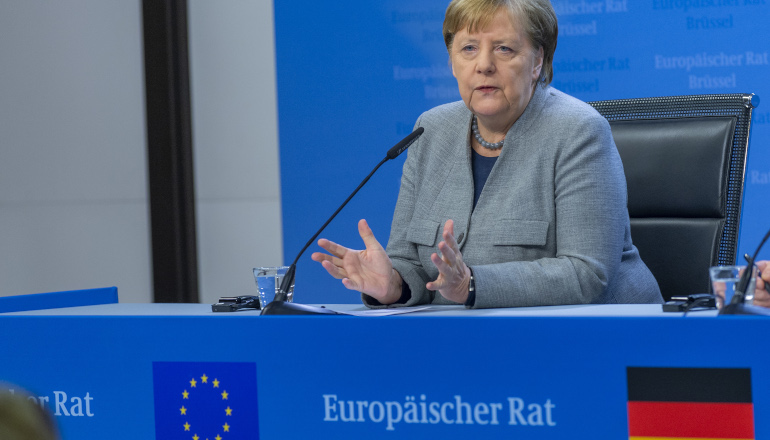
Germany will hold the presidency until January and WindEurope said it has shown an intention to bet on offshore wind and renewable hydrogen for a green recovery and just transition.
Germany is looking to agree resolutions on a framework for joint offshore wind projects between countries, so called “hybrid” projects which go beyond one single grid connection from the wind farm to the ‘host’ country.
“The EU has great plans for the expansion of offshore wind. If they want to reach the goal of 450 GW by 2050 cost-efficiently, hybrid projects will have a big role to play.”
“WindEurope has 10 very practical proposals to help accelerate a coordinated expansion of offshore wind in line with the Green Deal”, says WindEurope chief executive Giles Dickson.
A new position paper published by WindEurope lays out what it believes is needed from the EU Offshore Renewable Energy Strategy, the adoption of which this October will be central to the German plans.
WindEurope has published a position paper on the EU Offshore Renewable Energy Strategy, which identifies the need for a collaborative and long-term approach to maritime spatial planning, aligned with EU climate goals.
It highlights the key role of both hybrid offshore wind farms and floating offshore wind, and calls for the EU’s TEN-E programme to support investments in the former. And it identifies two-sided Contracts for Difference as the most efficient auction system to finance new investments in offshore wind.
Dickson said that Germany currently held not only the EU Presidency but also the Presidency of the North Seas Energy Forum, adding: “This puts them in an exceptional position to drive the expansion of offshore wind and the collaboration between countries that is needed to deliver it.”
“The wind industry is ready to make the necessary investments. Now is the time to get the policies right.”
Germany has also proposed improving business models through market design to unlock investments in renewable hydrogen, and a European approach to CO2 pricing that includes all sectors and the introduction of a moderate CO2 floor price within the framework of the European Emissions Trading System.