


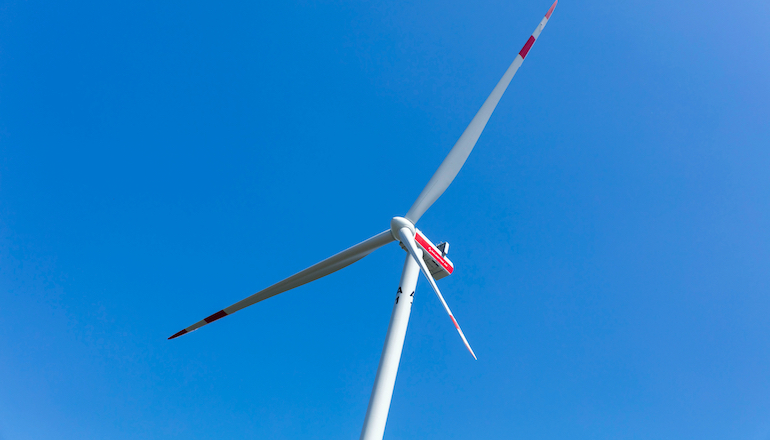
German steel company Salzgitter in partnership with Eon subsidiary Avacon and Linde have commissioned a green hydrogen plant powered by wind energy.
The ‘Wind Hydrogen Salzgitter – WindH2’ is a central component of the Salcos Salzgitter Low CO2 Steelmaking technology project developed by Salzgitter.
Green hydrogen will replace the carbon previously required for iron ore smelting.
The three blast furnaces currently in operation will have to be gradually replaced by a combination of direct reduction plants and electric arc furnaces.
Such a transformation of steel production could reduce CO2 emissions by around 95% by 2050, Salzgitter said.
Avacon operates seven newly-constructed wind turbines with a total capacity of 30MW on the Salzgitter site.
Salzgitter Flachstahl has installed two Siemens 1.25MW PEM electrolysis units centrally on the plant site, which will generate around 450 cubic meters of hydrogen per hour.
Hydrogen is already used in steel production for annealing processes and in the hot-dip each lines.
Industrial gas producer Linde currently supplies the gas by truck and will continue to ensure a continuous supply of hydrogen in the future.
All the plants are currently in trial operation.
The partners want to gain know-how and experience with the on-site production of wind power and hydrogen, as well as their integration into the complex procedures and processes of an integrated steelworks.
The costs for the entire project is about €50m, with the construction of the electrolysis plant funded by KfW.
Salzgitter executive board chairman Heinz Jorg Fuhrmann said: “We are proud to be pioneers in the industrial use of green hydrogen in the steel industry.
“As demonstrated by our Salcos project, we are technologically capable of achieving significant CO2 reductions using hydrogen.
“The Wind Hydrogen Salzgitter – WindH2 sector coupling, which is unique in Germany to date, is a significant building block on the way to climate-friendly steel production.”
German Federal Ministry for Economic Affairs and Energy State Secretary Andreas Feicht said: “The Windwasserstoff Salzgitter – WindH2 project was supported by the Federal Ministry for Economic Affairs and Energy with €1.1m from the federal funding for energy efficiency in the economy.
“With the sector coupling of wind energy and hydrogen production, the project implements one of the objectives of the German government’s National Hydrogen Strategy: The use of climate-friendly hydrogen produced from renewable energies is a key element for decarbonisation in industry.”
Eon chief executive Johannes Teyssen said: “Green gases have what it takes to become the ‘staple’ of the energy transition and make a significant contribution to decarbonizing industry mobility and heat.
“The jointly implemented project symbolises a milestone on the way to virtually CO2-free steel production and shows that intelligent sector coupling can replace fossil fuels.”
Avacon chief executive Marten Bunnemann said: “With the wind farm on the industrial site of Salzgitter, we are supplying renewable electricity for the production of green hydrogen.
“This is used directly within the production processes and replaces fossil fuels.
“The entry into the hydrogen economy is emerging in regional stand-alone solutions, such as in Salzgitter, which are increasingly being combined to form an overall system.
“We will continue to drive this process forward together with our partners in politics, science and industry.”