


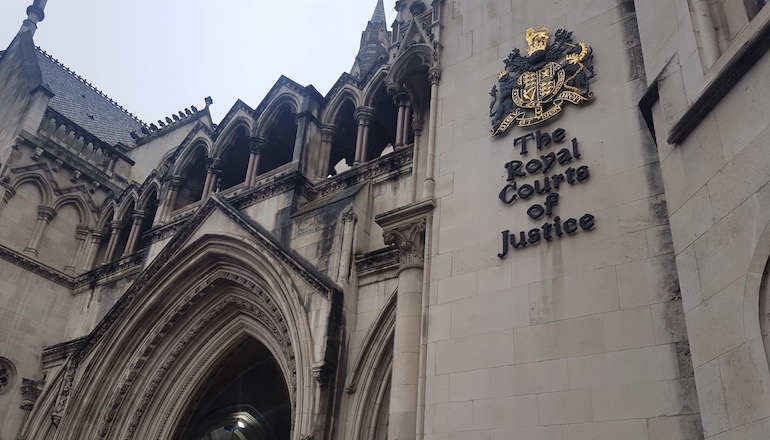
The UK High Court has overturned the development consent for Vattenfall’s 1800MW Norfolk Vanguard offshore wind project off East Anglia following a legal challenge.
The case was brought by local resident Ray Pearce who argued the BEIS Secretary of State unlawfully excluded from consideration the cumulative visual effects of the Norfolk Vanguard wind farm taken together with Vattenfall’s adjacent 1.8GW Norfolk Boreas development, which is still in planning.
Both wind farms were to share some onshore infrastructure in the Necton area but are subject to separate applications for development consent.
In a decision handed down this morning Mr Justice Holgate said “There is no justification for the court to withhold the relief sought by the claimant.
“The Defendant’s decision letter dated 1 July 2020 to grant a development consent order for the Norfolk Vanguard Offshore Wind Farm…must be quashed.”
Mr Holgate said the decision may affect the outcome of a consent ruling on the Vattenfall’s 1.8GW Norfolk Boreas project, which is due early this year.
“The defendant will need to give careful consideration as to how the evaluation of cumulative impacts relating to development at Necton for both projects should be approached in each decision,” he added.
The judge said it was “doubtful” the Secretary of State could determine Boreas without giving “reasonable opportunity” for interested parties to make new representations considering the implications of the Vanguard ruling.
“We are disappointed by the outcome but we will be considering the judgment carefully before deciding next steps,” said a spokesperson for UK energy department BEIS.
The application must now go back to the Secretary of State for reassessment, according to the Planning Inspectorate.
Vattenfall UK country manager Danielle Lane said the developer was disappointed with the result.
“[The ruling] relates to the process for granting consent and is not about the merits of our world class Norfolk Vanguard project,” she said.
“It’s vital that the Government now acts to redetermine consent, with regard to the judge’s ruling, as quickly as possible.
“That way we can continue to invest in the region and remain on track to begin generating low cost, renewable electricity by the late 2020s.
“With the expansion in offshore wind that’s required for the UK to reach net zero by 2050, the planning process needs to be able to address and resolve issues much sooner and avoid the uncertainty about whether projects will proceed even after they have planning approval.”
Ray Pearce told reNEWS the decision shows that the UK planning process is working properly.
“Planning applications can’t be railroaded through. There are laws and processes that need to be followed,” he said.
“The decision today is power to the people of Norfolk, who the courts agree were wronged.
“Alternative ways of connecting offshore wind farms, like those being explored in the BEIS-led review of offshore transmission, need to be explored.”