


Successful implementation of the South Korean government’s Green New Deal could place the country at the forefront of some of the energy industries of the future, according to a policy review by the International Energy Agency (IEA).
South Korea recently set a target of reaching carbon neutrality by 2050.
To accelerate the transition to low carbon energy, the government is committed to substantially increasing the share of renewable energy sources in the electricity supply, gradually phasing out coal, improving energy efficiency and fostering the country’s nascent hydrogen industry.
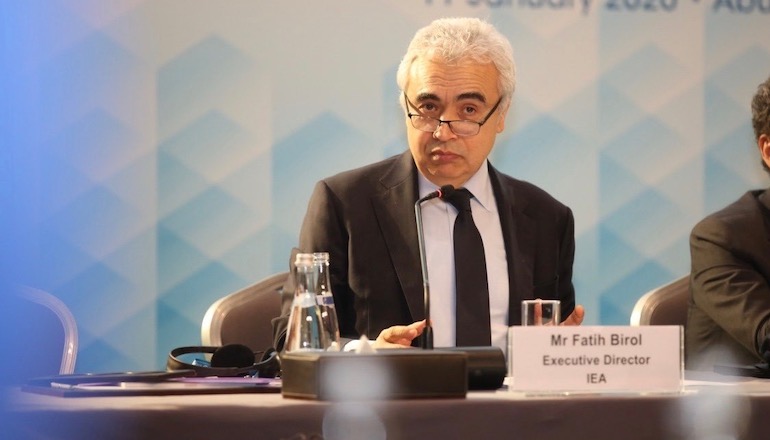
IEA executive director Fatih Birol (pictured) said: “Many of these measures will help Korea not only to advance its energy transition but also to improve its energy security – a high priority given the country’s limited domestic energy production.”
Birol is launching the report today at an online event with Joo Young-joon, Deputy Minister at the Korean Ministry of Trade, Industry and Energy.
“I welcome Korea’s ambitious carbon-neutrality goal and the initial steps set out in its Green New Deal. The IEA is committed to supporting the government in these vital efforts,” Birol added.
Plans by the government to close aging coal-fired plants reflect growing concerns among the population over climate change and local air pollution, the IEA report stated.
South Korea’s private sector has a “high capacity” for technology innovation and its population has shown an almost “unparalleled openness” toward digitalisation.
This closely links Korea’s energy transition to efforts to spur investments in energy storage systems, smart grids and intelligent transport systems, the IEA found.
The focus of Korea’s energy transition must go beyond the power sector to target emissions from industry and transport, the IEA policy review said.
The industrial sector is emissions-intensive and accounts for over half of South Korea’s final energy consumption despite the notable improvement in energy efficiency over the last decade.