


The International Energy Agency (IEA) has produced a Sustainable Recovery Plan that can help revitalise economies and boost employment while making energy systems cleaner and more resilient.
The plan will focus on a series of actions that can be taken over the next three years by governments around the world.
The largest portion of the millions of new jobs created through the Sustainable Recovery Plan would be in retrofitting buildings to improve energy efficiency and in the electricity sector, particularly in grids and renewables.
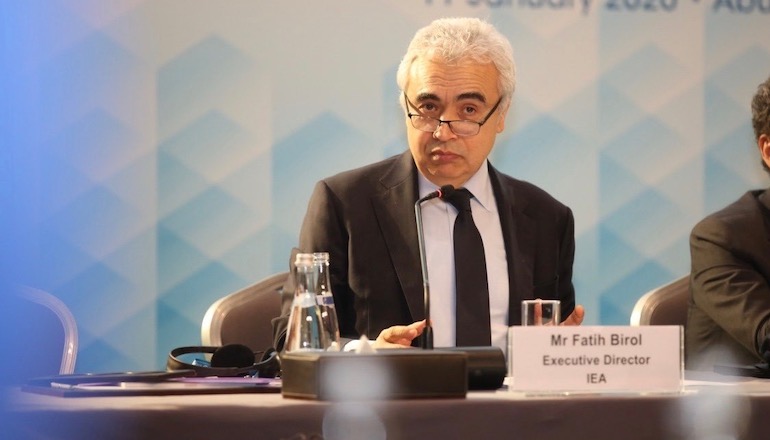
IEA executive director Fatih Birol (pictured) said: “Governments have a once-in-a-lifetime opportunity to reboot their economies and bring a wave of new employment opportunities while accelerating the shift to a more resilient and cleaner energy future.”
The Global Wind Energy Council (GWEC) worked closely with the IEA on the report on highlighting the economic potential of renewable energy, which is singled out as one of the top drivers of growth and decarbonisation in the report.
GWEC chief executive Ben Backwell said: “Six months. This is our time window now if we have any chance at decarbonising our economy securing a future for our planet.
“The IEA report highlights that wind and solar should be a top priority for governments as they prepare their stimulus packages to power a green recovery – and this is not just because of their climate benefits.
“According to the report, targeted investment in renewable energy can create up to 1.1 million jobs per year and be a cornerstone in driving economic growth now, and in the future. Last month, leading corporates and associations in the wind industry showed their commitment to supporting a green recovery in a statement.
“The wind sector is ready to deliver – now we need the support of policymakers to realise the IEA’s Sustainable Recovery Plan, otherwise we risk missing out on a once-in-a-lifetime opportunity to reset our economies and put the world on a more prosperous and sustainable path.”
Achieving the plan’s results would require global investment of about $1tn annually over the period, said the IEA, equivalent to 0.7% of today’s global GDP.
The sum includes public spending and private finance that would be mobilised by government policies.
The roadmap is detailed in a special report on sustainable recovery, as part of the IEA’s flagship World Energy Outlook series.
By integrating energy policies into government responses to the economic shock caused by the Covid-19 crisis, the plan will “accelerate the deployment of modern, reliable and clean energy technologies and infrastructure”, the IEA said.
In an analysis carried out in cooperation with the International Monetary Fund, the report shows that the set of policy actions and targeted investments over the 2021-2023 period that are outlined in the Sustainable Recovery Plan can achieve a several outcomes.
These include boosting global economic growth by an average of 1.1% a year, saving or creating roughly nine million jobs a year, as well as reducing annual global energy-related greenhouse gas emissions by a total of 4.5 billion tonnes over the three years.
The IEA’s new energy employment database shows that in 2019, the energy industry directly employed around 40 million people globally.
The special report estimates that three million of those jobs have been lost, or are at risk, due to the impacts of the Covid-19 crisis, with another three million jobs lost or at risk in related areas such as vehicles, buildings and industry.
The other areas that would see higher employment include energy efficiency in industries such as manufacturing, food and textiles, low-carbon transport infrastructure and clean vehicles.
In addition, the plan would deliver other improvements to human health and well-being, including driving a 5% reduction in air pollution emissions and enabling nearly 270 million people to gain access to electricity.
Birol added: “Policy makers are having to make hugely consequential decisions in a very short space of time as they draw up stimulus packages.
“Our Sustainable Recovery Plan provides them with rigorous analysis and clear advice on how to tackle today’s major economic, energy and climate challenges at the same time. The plan is not intended to tell governments what they must do.
“It seeks to show them what they can do.”
The IEA’s virtual Clean Energy Transitions Summit on 9 July will gather ministers from countries representing 80% of global energy use, as well as industry CEOs, big investors and other key leaders from the public and private sectors around the world.