


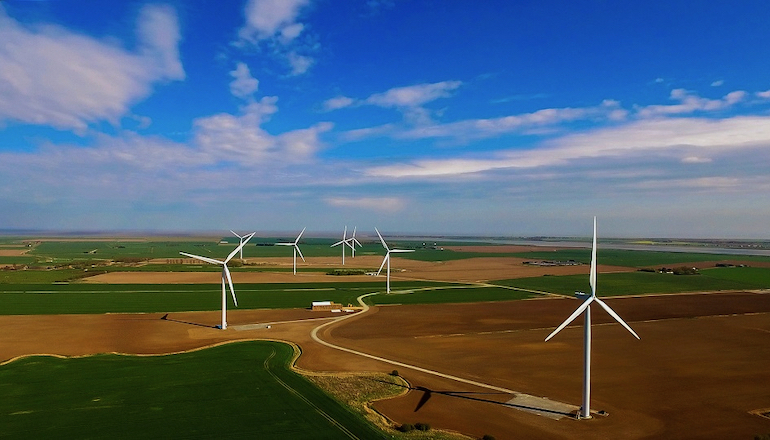
The UK’s total capacity of onshore wind could grow to 30GW by 2030, more than double the UK’s current operational capacity of 13,600MW, according to new research from RenewableUK.
The trade group’s latest Onshore Wind Project Intelligence report suggests that new onshore wind capacity is set to increase over the course of this decade, as technology costs fall and the resumption from next year of auctions for contracts to generate power.
If everything in the current pipeline gets built, the most significant increases in deployment will occur from 2025 onwards, reaching 30,361MW by the end of 2029, the report highlighted.
The total project pipeline includes UK onshore wind projects that are operational, under construction, consented, submitted into the planning system or being developed for submission into planning.
The Committee on Climate Change has recommended that the UK should install 35GW of onshore wind by 2035 at a rate of at least 1GW a year, and RenewableUK’s “optimum scenario” shows that this is achievable if projects are consented in a “timely manner” and with the right planning framework in place.
Deployment at that level would support over 30,000 jobs, secure £46bn in new investment, and could save a typical household £50 a year, RenewableUK said.
The report also shows that, as part of this 30GW, an additional 1.2GW of capacity could be contributed from repowering projects by 2030.
To date repowering only accounts for 231MW of current UK onshore wind capacity.
RenewableUK policy and regulation head Rebecca Williams said: “Now that onshore wind is firmly back on the table, companies are bringing forward projects at a scale that can make a huge contribution to building back greener.
“Onshore wind is one of the cheapest ways to generate clean power and we can ramp up this technology rapidly to reach net zero emissions.
“Next year’s auction for new clean energy contracts is a crucial step in unlocking the new jobs and investment that onshore wind can deliver as part of the green recovery. Our latest forecast shows what’s possible, but we need the right policy levers and regulation in place to make it happen”.