


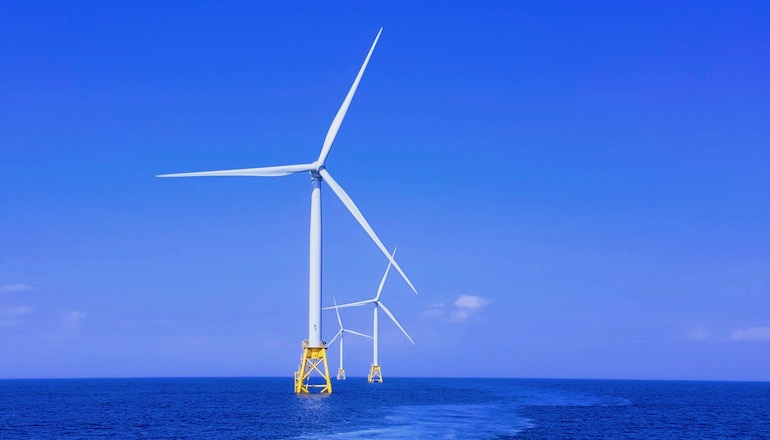
The US offshore wind sector is currently uneconomical, according to research by S&P Global Ratings.
In its ‘Foresight is 2020: Tailwinds for US offshore expansion’ report, S&P said it estimates the levelised cost of energy (LCOE) for US offshore wind, excluding an investment tax credit, to be about $85 a megawatt-hour.
The LCOE falls to $65/MWh with a 30% investment tax credit, it added.
This is higher than for current alternatives, such as natural gas peakers and onshore wind, which have LCOE of $68/MWh and $40/MWh respectively, the ratings agency said.
It noted that risks for offshore wind are different from that for onshore, with the latter having several years of experience in terms of construction, turbine performance, operations and maintenance cost predictability and a track record of power generation.
The report identifies the onshore transmission needed to accommodate offshore wind capacity as the main concern of industry experts.
These concerns include unplanned costs of upgrading onshore transmission, placement of projects in independent system operator queues to interconnect on time, and the areas to tie in offshore cables.
S&P said that integrating 26GW of offshore wind – the current aggregate pipeline volume – will “almost certainly require the development of networked offshore grids and approximately 3000 miles of offshore transmission lines”.
Nearly half of the offshore wind LCOE gap between Europe and the US stems from costs related to hardening of onshore networks and development of offshore transmission, the report added.
But, it said, lessons could be learned from experiences in other countries and a step in the right direction is a partnership between Anbaric and and the Ontario Teachers’ Pension Plan.
The partners filed an application with the Bureau of Ocean Energy Manager in November last year to develop an open-access offshore transmission system that will connect up to 16GW of offshore wind energy to southern New England states.
S&P also said that, despite the risks, investors and lenders are taking a much greater interest in the offshore wind sector.
This is being driven by the potential for dramatic declines in cost once the industry scales up, and other factors, such as the higher volumes of energy that could be delivered compared with onshore wind and closer location to demand centres.
The report’s authors said they are “cautiously optimistic about prospects for offshore wind energy output”.
However, “the onus is on the industry to convince us of offshore wind’s potential from a credit perspective”.