


In 2024, global trends in levelised cost of electricity (LCoE) continues to reflect significant advances in renewable energy technologies, according to Wood Mackenzie.
With wind and solar power leading the way, renewables are on a “steady path” towards outcompeting traditional fossil fuel sources, even with significant regional variation in cost competitiveness.
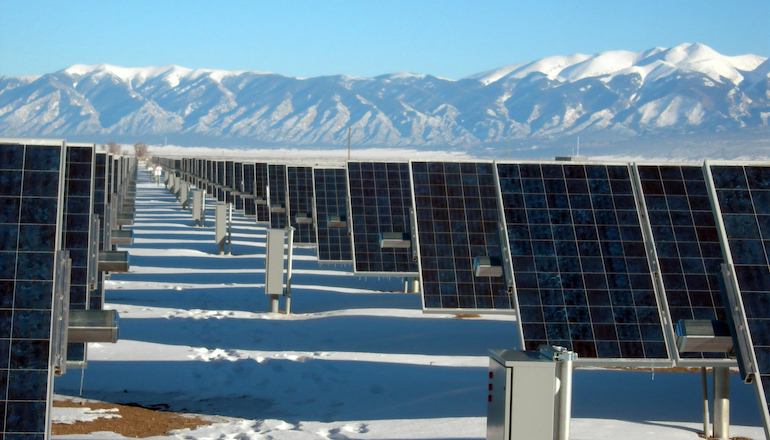
For solar, fixed-axis systems average an LCoE of $66/MWh globally, with a wide range from $28/MWh to $117/MWh, reflecting the influence of geography, technology advancements, and regional market conditions.
Single-axis tracking solar systems fare slightly better, averaging $60/MWh, with a range from $31/MWh to $103/MWh, reinforcing their growing role in utility-scale projects.
In contrast, onshore wind technology reports a global average LCoE of $75/MWh, spanning from $23/MWh to $139/MWh, demonstrating its competitiveness across a variety of terrains and markets.
Offshore wind, particularly floating systems, remains expensive, with fixed installations averaging $230/MWh and floating systems at $320/MWh.
These costs are expected to fall over time but remain higher than onshore options.
In 2024, the LCoE for renewable technologies like wind and solar in APAC decreased by 16%, driven by a 21% drop in capital costs.
Solar remains the region’s cheapest generation option, with competitive pressure leading to significant reductions in project costs.
Europe saw a modest 0.2% reduction in the average LCoE for renewables, despite a 9% decrease in installation costs from 2020 to 2023, due to the financial challenges of project funding.
Utility-scale solar PV in Southern Europe leads the way, benefiting from significant declines in capital costs and achieving the lowest LCoE in the region.
In North America the renewable technologies LCoE declined by 4.6% in 2024, underpinned by a 4.2% drop in capital costs.