


Innogy is carrying out a six-month survey campaign to inform the final design of its 1.4GW Sofia wind farm in the Dogger Bank.
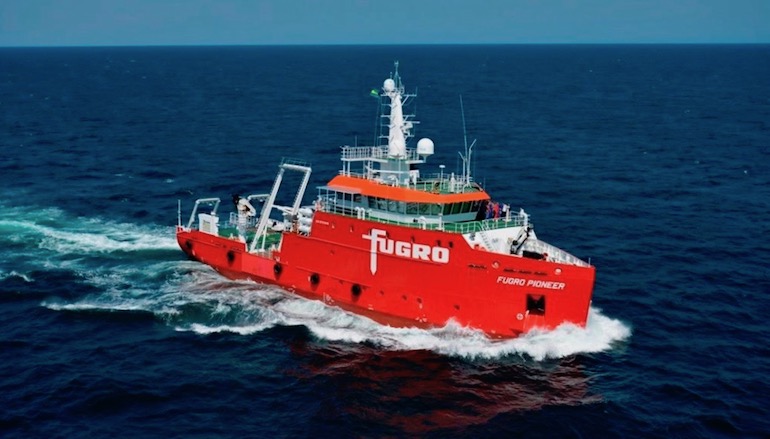
Fugro vessel Pioneer began work along the project’s 220km-long offshore export cable route this week.
The developer said both geophysical and geotechnical surveys will be carried out over the next six months to provide the project’s consent and engineering teams with key data about the seabed and marine conditions prior to construction.
The 53-metre vessel Pioneer will focus on geophysical surveys and will be at sea for up to a month, with members of both the Sofia and Fugro teams onboard as it sails the length of the route.
A local guard vessel will be chartered to support the campaign.
“This initial suite of surveys will cover a variable corridor of around 175 metres wide, and will include environmental grab samples, drop down video transects, sub-bottom seismic profiling, side-scan sonar, bathymetry and magnetometer surveys,” Sofia senior project manager Damien Fensome said.
Geotechnical tests along the export cable corridor will be carried out from next month and see a separate vessel take cone penetration tests and vibrocores.
“Together the information collected will be analysed to build up a comprehensive picture of the seafloor and sub seafloor conditions, informing the need for further surveys, the final cable route, the landfall location and the most appropriate cable installation methodologies.”, Fensome added.
“Given that Sofia’s 600km2 array site is 195 kilometres from the coast of the North East of England and the export cable will be 220 kilometres long, we believe this is the longest such cable route survey ever undertaken for an offshore wind farm.”
Further surveys across the export cable and array site are due to be carried out later this year. The full site investigation is due to be completed by August 2020.