


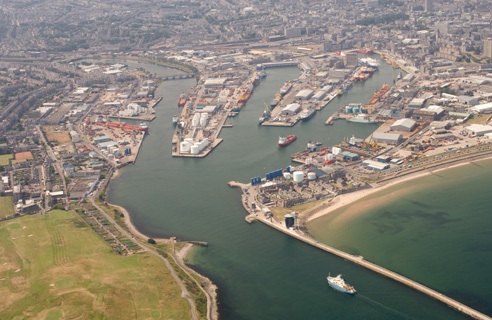
Opportunity North East (ONE) has set out its ambitious plan to help create a “world-leading” energy transition zone (ETZ) in Aberdeen, Scotland.
The zone aims to ramp up the delivery of net zero products and technologies to pave the way for an economy based on offshore wind, hydrogen, carbon capture usage and storage (CCUS), alongside oil and gas.
ONE is working with regional and industry partners, including Aberdeen City Council and Aberdeen Harbour Board, to set up the ETZ.
The zone’s location will “accelerate the region’s ambition” to be at the forefront of energy-related research, manufacturing, technology, operations and support activities that will help deliver the UK and Scotland’s net zero goals, according to ONE.
The ETZ will benefit from Aberdeen’s combination of on and offshore infrastructure, oil and gas track record, energy companies, global supply chain, track record of research and development and a highly skilled workforce.
The zone aligns with the UK and Scottish governments’ focus on place based economic growth and the plans for a ‘Transformational Sector Deal’ for the oil and gas industry, to help it decarbonise.
Opportunity North East chair Sir Ian Wood said: “Urgent action supported by large scale investment is required if we’re to meet Scottish and UK Government net zero targets by 2045 and 2050.
“This region, with the backing of government and industry, from operators through the supply chain, is committed to delivering solutions. Our region has made an invaluable contribution to the UK’s energy requirements over the last 50 years and we can now add to this with a significant contribution to the net zero objective.”
Industry body Oil & Gas UK (OGUK) predicts that national energy sector capital investment will have to double to £50bn annually to decarbonise the UK economy.
While Aberdeen has already seen an increase in pace and scale of investment in recent years the ETZ will provide the physical infrastructure and collaborative environment to fast track investment in offshore wind, hydrogen and CCUS, areas where the region has established strengths.
The ETZ will used Aberdeen Harbour Board’s £350m investment to create combined marine and onshore support.
In becoming the largest harbour by berthage in the UK, the extensive quay lengths, expansive laydown area and deep water channel of the new South Harbour facility will transform the functionality of the port, providing a commercial gateway to offshore infrastructure, accommodating large-scale renewable industry activity and supporting a broad range of onshore industrial opportunities within the ETZ.
The ETZ will also provide a “focal point” for academic and industry research, test and demonstration, drawing from energy-related research by the universities of Aberdeen and Robert Gordon. It will also support the plans of the Oil and Gas Technology Centre’s Net Zero Solutions Centre.
Aberdeen City Council co leader Jenny Laing said: “There is a huge opportunity through the rapid transfer of oil and gas experience, assets and skills to accelerate the delivery of low carbon solutions as well as more carbon efficient oil and gas production.
“The ETZ is a transformational project and has a vital role to play in catalysing the transition of Aberdeen from an oil and gas capital to a global integrated energy cluster.”
She added the ETZ will help “anchor a broad energy supply chain, create and secure high value jobs, drive export growth and help deliver the UK and Scotland’s net zero carbon goals.”
Scotland energy minister Paul Wheelhouse said: “The oil and gas industry has a key role to play in a sustainable, secure and inclusive energy transition and we want to work with the industry to ensure that vision is realised and to see the 105,000 people whose jobs are supported by the sector have a sustainable future in the net zero emission economy we need to deliver.
“Initiatives like the ETZ could play a pivotal role in making that transition possible, by exploring how to develop renewable technologies related to technologies such as offshore wind, CCUS and deployment of hydrogen and derivatives of hydrogen in our energy system, as well as increased investment in energy efficiency.
“All these opportunities can extensively use the undoubted skills and ingenuity of those working in the oil and gas sector and its supply chain.”
The development of low carbon technologies such as CCUS is viewed by experts such as the UK Committee on Climate Change and International Energy Agency, as being essential to achieving Scottish, UK and international climate emissions targets.