


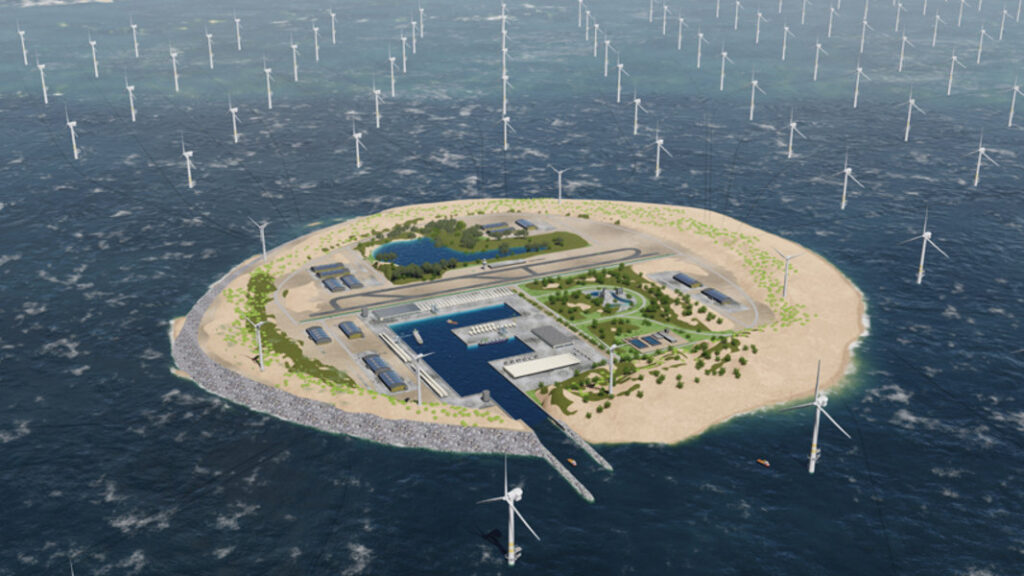
TenneT and its partners in the North Sea Wind Power Hub (NSWPH) consortium have published the results of the project’s assessment phase.
The results are based on the consortium’s analysis of the possibility and conditions required to build so-called wind power hubs in the North Sea.
The NSWPH partners, which also include Energinet, Gasunie and Port of Rotterdam, found that the hub-and-spoke concept is feasible.
In this type of approach transmission hubs are built out at sea with several far from shore offshore wind farms connected to each one.
Hubs could be electrical transmission only, or a combination of electrical transmission and hydrogen production, or hydrogen production only.
The consortium advises that a gradual roll-out of 10GW to 15GW hubs is the next logical step towards a large offshore wind build-out.
The first hub-and-spoke project is likely be electrically connected to shore and with additional power-to-gas to provide energy system flexibility.
The facility could be operational in the 2030s.
The consortium stated that while it is likely that a first hub-and-spoke project within current EU and national regulatory frameworks and market design can be built, significant changes will be need at a national level, in terms of approaches, planning and policies, to allow for integrated infrastructure projects.
The partners in the NSWPH project advocate that 180GW of offshore wind can be built by 2045 if the hub-and-spoke approach is adopted and that coordination on an international level is needed to connect and integrate large-scale offshore wind cost-effectively.
Urgent agreements on developing sustainable energy from offshore wind after 2030 are needed, stated the consortium, which has been working with policy makers, offshore wind farm developers and non-governmental organisations.