


Equinor Wind US is part of an effort to enhance whale monitoring in the waters of New York Bight.
The offshore wind developer is working with the Wildlife Conservation Society’s New York Aquarium, and the Woods Hole Oceanographic Institution in a joint project to deploy two acoustic buoys for detection and monitoring of cetaceans.
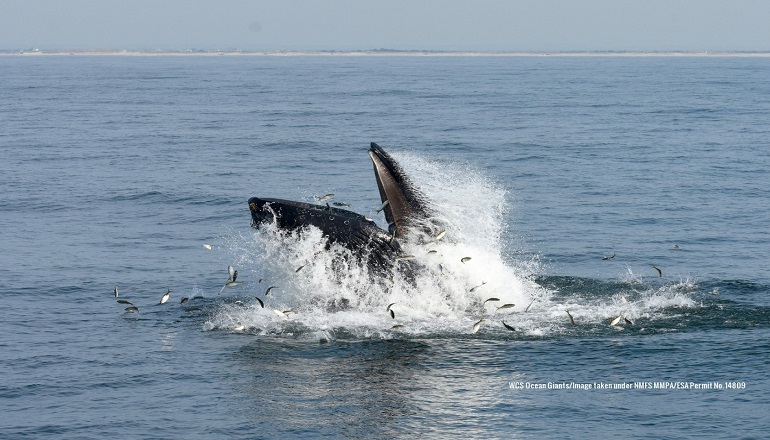
The buoys will provide near real-time monitoring of species such as the sei whale, fin whale, humpback whale (pictured), and the highly endangered North Atlantic right whale.
The new devices will build on prior monitoring work in the New York Bight done by a previously deployed acoustic buoy funded by the G Unger Vetlesen Foundation and the Flora Family Foundation.
The buoys will help marine conservation scientists increase their understanding of whale species that spend time in and migrate through the waters off the coasts of New York and New Jersey.
The data will also help inform ecologically sound decisions for potential development within Equinor’s offshore wind lease site.
The effort will also provide the general public with a fascinating window into the behaviours of acoustically sensitive marine mammals that live in the coastal areas.
The near real-time data will be publicly available on a dedicated web page and eventually put on display in the New York Aquarium.
When deployed, the new acoustic buoys will increase detection rates of the North Atlantic right whale, one of the world’s most endangered whale species, in the New York Bight.
This slow-moving, coastal animal is especially vulnerable to ship strikes and fishing gear entanglement, making information on their presence and migratory habitats crucial for effective conservation actions.
New York Aquarium senior scientist and director of the Wildlife Conservation Society’s Ocean Giants programme said: “This information will help us answer questions about how these four whale species, including the North Atlantic right whale, are moving through and using our local waters.
“Having these data readily available will help guide decision-making and best practices for offshore wind development and other human-use activities in the New York Bight.”