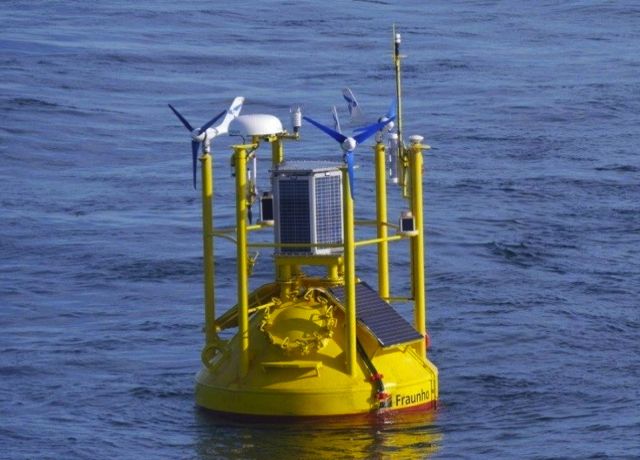
The Carbon Trust has completed the world’s largest trial of floating light detection and ranging systems, known as lidars, boosting the case for their use as a source of wind measurement data.
The four-year trial proved lidar systems’ ability to produce accurate data across a variety of technologies and sea states, the company said.
Lidar systems are cheaper to instill than meteorological masts, but their widespread use has been restrained by a previous lack of validated data on their accuracy levels.
According to the Carbon Trust, the application of lidar systems can generate cost savings of up to 90%, based on a typical investment of €10m for a meteorological mast.
Adoption is also faster, taking months rather than years to plan and hours rather than days to dispatch to measurement campaign sites.
Many of the devices tested are now being deployed by offshore wind farm developers, the Carbon Trust said.
Dong Energy senior management engineer Richard Khaira-Creswell said the trials have been highly valuable.
“The framework, established by the Carbon Trust, has enabled the development of floating lidar concepts – in terms of technical performance, as well as practical issues of safety and reliability,” Khaira-Creswell said.
“This work has made significant progress towards a mature and robust technology which is accepted across the industry, and will lead directly to reduce the cost of energy.”
Image: Seagreen Wind Energy