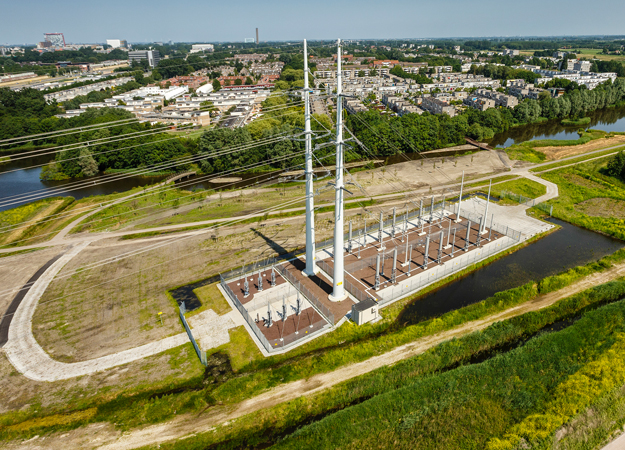
TenneT is leading a pilot project to examine new ways to provide primary reserve capacity to deal with fluctuations in the electricity grid as more renewable power comes online.
The Dutch transmission system operator said the increase in electricity from renewable sources will lead to a decline in reserve capacity offered by conventional generation, such as coal and gas.
Therefore, it is partnering with Engie, KPN, Peeeks and Senfal on a project to see which new technologies can play a part in providing primary reserve capacity.
TenneT said the partners intend use a variety of methods including control of combinations of water pumping stations, cooling installations, CHP plants, used batteries, thermal boilers, solar panels and wind turbines.
The TSI said grid stability is essential to prevent power disruptions or outages and so it has to ensure a stable frequency of the interconnected power grid.
To maintain a stable frequency there needs to be an exact match between the supply of electricity and the demand, because any imbalance will result in a disturbance of the grid frequency, the company said.
“The current method to achieve this is to have conventional power plants increase or decrease their output, which is the so-called primary reserve capacity TenneT purchases,” it added.
The pilot project will look at whether smaller suppliers are also able to provide primary reserve capacity, either without or in concert with alternative power plants, to compensate for any disturbances in European grid frequency.
The participants are set to start delivering primary reserve capacity to TenneT from January 2017.
The Dutch TSO said it started another pilot earlier this year with The New Motion involving the use of charging stations for electric cars as primary reserve capacity.
TenneT chief operating officer Ben Voorhorst said: “These new pilots fit in with the wider strategy TenneT is pursuing to prepare the electricity system for the larger share of renewably produced energy.
“Over the coming years, the production of renewable energy will soar, and there will be times when practically all of the large power plants are switched off.
“It’s at those times in particular that we need to be able to cushion any fluctuations.”
Image: TenneT
TenneT tackles grid stability
Pilot project to look at new ways to provide primary reserve capacity
 By EBS