Pile driving at offshore wind farms has a limited long term impact on harbour seal behaviour, according to new research.
The study by the University of St. Andrews in Scotland found that seals stayed up to 20km away from locations where seabed piling was taking place but returned within a few hours once the work was complete.
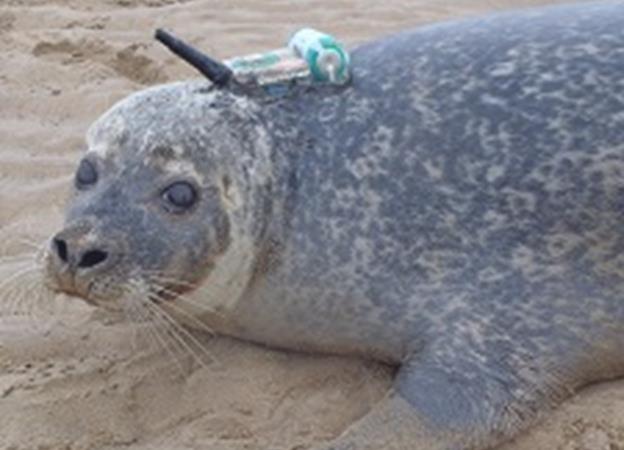
Researchers from the university’s Sea Mammal Research Unit (SMRU) attached GPS tags to seals (pictured) to monitor their movements during a campaign of offshore construction.
The team warns that any avoidance of areas can result in exclusions from important foraging areas for the mammals.
However, staying away may protect against heading damage and there was no long term impact on their movement patterns which limits the negative consequences of seabed works, the study concluded.
“Seals are protected by European law and our findings will be used by the regulators and the marine renewable industry to more accurately predict the effect of particular windfarms on seals,” said SMRU’s Dr Debbie Russell.
“Furthermore, the results can also be used to minimise the effects of wind farm construction on seals. For example, now we have a good idea of what sound levels cause seals to be displaced, engineering solutions can be focused on reducing sound levels to below the displacement threshold.”
She added: “In addition, the results of this study should inform the construction schedule of wind farms to minimise impact of seals. It is essential to have breaks in piling that allow seals to forage and travel unhindered. This is especially important during concurrent construction of multiple wind farms in an area.”
Image: University of St Andrews