Scottish wind power jumped 15% in April when compared with the year-ago figures, pumping nearly 700,000 megawatt-hours of electricity onto the national grid.
Figures compiled by WeatherEnergy and highlighted by WWF Scotland showed that the country’s turbines generated enough to meet, on average, the electrical needs of 79% of households north of the border.
On eight days during April, wind produced 100% or more of Scottish homes. Results were driven by both stronger winds and higher capacity when compared with April 2015.
Solar was also strong despite a late surge of winter, providing 70% or more of an average household’s electricity or hot water needs if fitted with the technology.
Dundee was the hotspot in terms of solar electricity while Inverness was top of the pops in terms of solar thermal.
WWF said ahead of Holyrood elections this week politicians now need to take Scotland to the “next level” in terms of renewables.
“If we’re to move to the next level in the global shift to a zero-carbon society then the next Scottish government must bring forward an energy strategy that ensures Scotland is the first EU nation to have a completely renewable electricity generation system by 2030,” said WWF.
Karen Robinson of WeatherEnergy said: “After a relatively slow start to the year, Scotland’s wind power output is back on the up thanks to some powerful winds during the month. Similarly, as we move toward summer, solar power is beginning to play an increasing role for those homes and businesses that have fitted solar panels.”
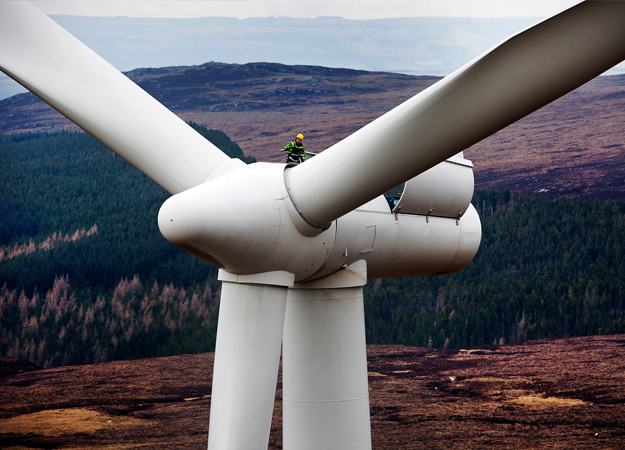
Image: the Farr wind farm in Scotland (Siemens)