The UK must cut its greenhouse gas emissions by 57% below 1990 levels during its Fifth Carbon Budget period, a report states today.
The Committee on Climate Change (CCC) has set out its proposals for the Fifth Carbon Budget to the UK government but added that new policies will be required in order to hit the targets.
The statutory advice covers the period between 2028 and 2032 and now the government has until June next year to respond to plans and confirm whether it will back the plan into law.
The findings state the UK should set a target to cut emissions by 57% compared to 1990 levels for the period 2028 to 2032. This equates to 1765 MtCO2 equivalent for the four year period.
The CCC said: “The budget should be met without the use of international carbon units (credits) outside the EU Emissions Trading System. If unexpected circumstances mean the budget cannot be met cost-effectively then we would revisit this advice.”The committee added that meeting the proposed budget will cost an additional £3bn per year by 2030 but estimates benefits from reduced emissions and health impacts will “outweigh the overall costs.”
The committee added that by the early 2030s the government should aim to reduce the carbon intensity of the power sector to below 100 grams of CO2 per kwH in 2030, compared to 450g today and an expected 200-250g in 2020.
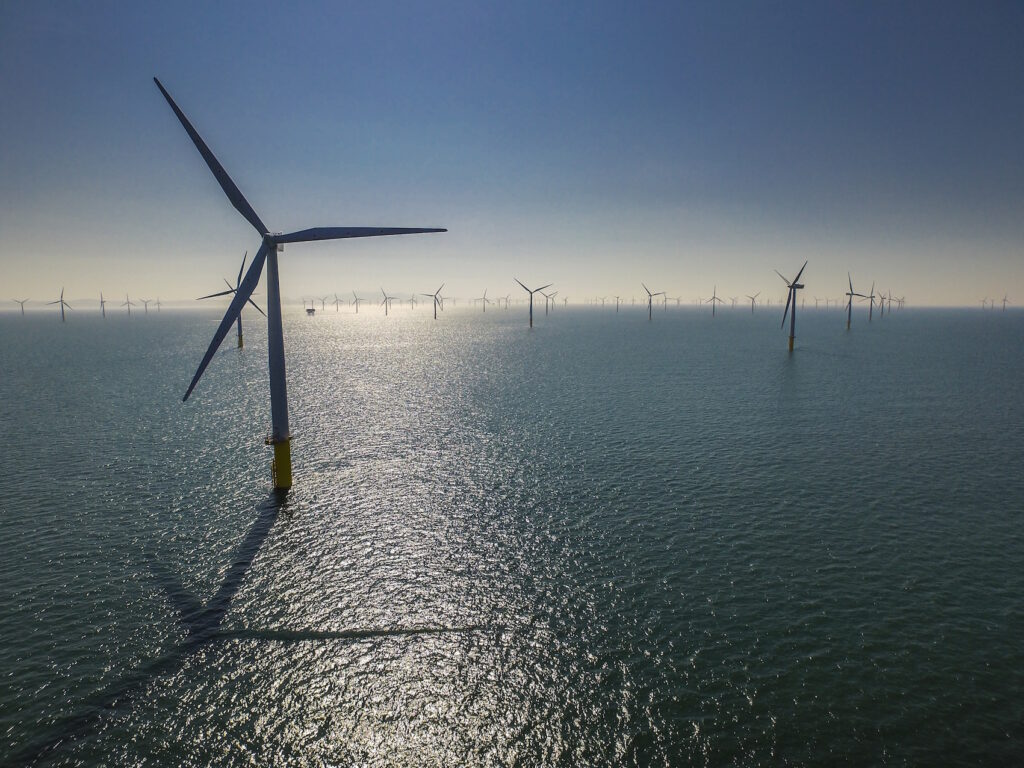
Offshore wind and carbon capture and storage will need to be rolled out throughout the 2020s in order to reach this goal.
Onshore wind and solar also will play a significant role in reducing emissions.
The CCC added that the government must provide “sufficient clarity” over the future policy context as it is “important in order to attract investment required for decarbonisation.”
Industry has since reacted to the report – stating the government have to sit up and notice the proposed budget and seriously consider the technologies they are making cuts to now.
Scottish Renewables director of policy Jenny Hogan said: “The publication of the Fifth Carbon Budget reaffirms what the Committee on Climate Change – the government’s own advisors – have already said: the amount of renewable electricity generated in the UK must double by 2030 if we are to meet our legally-binding climate change targets.
“It is important to note that onshore wind and solar, our cheapest renewable energy technologies, play a significant role in all scenarios for our future energy mix, and must be included if we are to decarbonise at the lowest cost to the consumer.
“However it is hard to see how any of these renewable technologies will be able to progress given current uncertainty around future support for the sector from the very government whose advisors are recommending their expansion.
“The report also contradicts the UK government’s recent statement to only support the deployment of future offshore wind projects if they further reduce costs by an unspecified amount. The Committee clearly argues that it is UK deployment of offshore wind that drives down costs, not the other way around, and that the future energy mix should include the roll-out of offshore wind.”
For the full Fifth Carbon Budget brief click here.
Image: Gwynt y Mor offshore wind farm (RWE)
Fifth Carbon Budget proposed
Offshore wind should play a starring role to cut emissions, state the CCC
 By EBS