


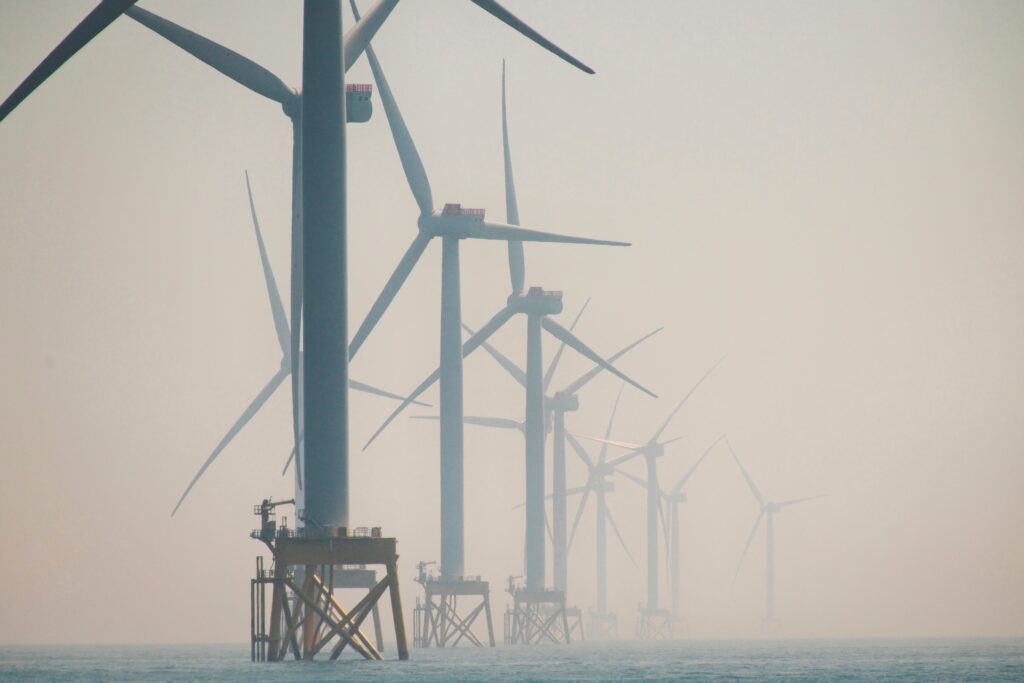
BEIS Secretary Kwasi Kwarteng has given the go-ahead to ScottishPower Renewables for two offshore wind farms totalling 1500MW at its EA Hub project in the North Sea.
The Conservative minister has granted development consent to the 602MW East Anglia 1 North and 867MW East Anglia 2 in a decision published this afternoon.
Kwarteng, who has given approval subject to a number of conditions including tweaks to the proposed permit orders, said there was a “strong case” for both projects.
“Given the national need for the development, as set out in the relevant NPSs, the Secretary of State does not believe that this is outweighed by the Proposed Development’s potential adverse impacts,” a decision letter for the EA1 North project stated.
“The Secretary of State has considered all the merits and disbenefits of the Proposed Development and concluded that, on balance, the benefits of the Proposed Development outweigh its negative impacts,” added a decision letter for the EA2 project.
The offshore wind farms will be located off the east coast of England, with EA1 North featuring up to 67 turbines and EA2 consisting of up to 75 turbines, all with maximum tip heights of 282 metres.
SPR already has permission for the 1.4GW EA3, which together with EA1 North and EA2 will form the 2.9GW EA Hub project.
A consent decision for the duo was expected on the 6 January but was pushed back after Kwarteng requested more information on issues relating to potential wildlife impacts and increased flood risks.
Natural England voiced concerns that the projects were situated too close to the Outer Thames Estuary conservation zone and called for turbines to be moved at least 10km away in order to mitigate harm to red-throated divers.
The Iberdrola-owned outfit agreed to scale back the proposed 800MW capacity at EA1N to 602MW in recent months to introduce an 8km gap while capacity was cut from 900MW to 867MW at EA2 to implement a 10km gap.
It also submitted an additional suite of compensation measures for East Anglia 1 North to account for seabird displacement effects caused by the wind farm’s shorter buffer zone.
Earlier this month, the statutory nature consultee said it was satisfied that such measures would maintain the integrity of the protected site.