


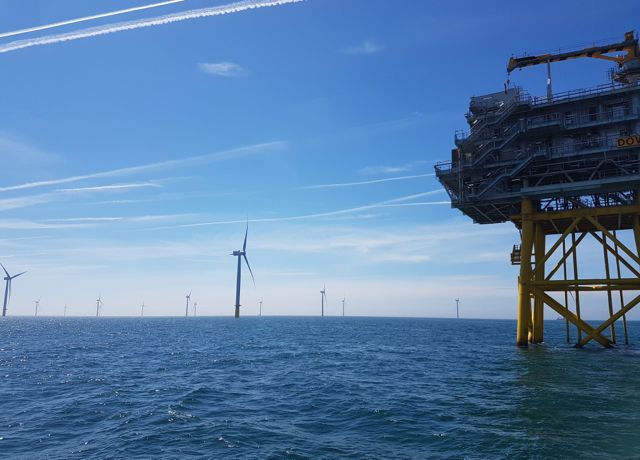
The transmission system operators (TSO) 50Hertz, Amprion and TenneT, together with the Federal Ministry for Economic Affairs and Climate Protection (BMWK), have announced plans for networking wind farms in the North Sea.
This would see connection lines from offshore projects with a total output of 10GW networked with each other. In addition to connecting the wind farms to the German electricity grid, the power lines would enable electricity to be exchanged with neighbouring countries like Denmark and the Netherlands.
So-called hybrid interconnectors are emerging, which enable increased international electricity trading, with this cross-regional trade increasing German and European security of supply and welfare. The power lines would also be better utilised and more efficient because the networking would be done at sea.
Federal Minister Robert Habeck said: “The energy transition is benefiting enormously from increased networking with neighbouring countries. With additional grid connections, more cost-effective electricity from renewable energies can be imported by Germany. At the same time, we have to curtail less electricity. The plans show how we will transform the energy system in close cooperation with our European neighbours. Wind energy at sea will play a crucial role in the climate-neutral energy system.”
Parallel to the planning, BMWK commissioned a study to examine the overall benefits of such an international power grid in the North Sea. The results show that networking reduces greenhouse gas emissions, increases security of supply, uses the available space more efficiently and saves considerable costs.
In the next step, the TSOs’ plans for the networking will be incorporated into official German and European planning processes. Together with the TSOs of the neighbouring countries, the proposals will form a foundation stone for an international offshore grid in the North Sea.