


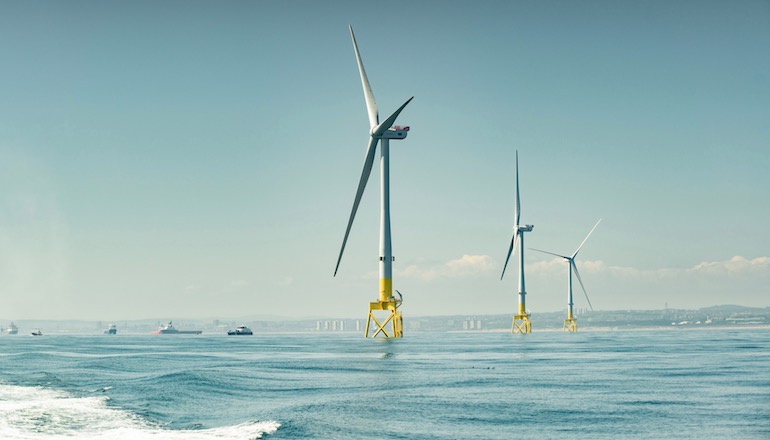
A Vattenfall-funded research programme into seabird flights around offshore wind farms has revealed behaviour that could “speed up the consenting process” for new projects by revealing that seabirds will avoid the sites.
The €3m study used radar and AI technologies to track flight patterns in 3D around the developer’s Aberdeen wind farm from the European Offshore Wind Deployment Centre (EOWC) in Scotland.
Video recordings produced “invaluable” data on the movements of kittiwakes, herring gulls, black-backed gulls and gannets.
Kittiwakes displayed avoidance behaviour from around 150 metres from the rotors, commuting herring gulls from around 100 metres and feeding herring gulls from 70 metres.
In general, gannets and small and large gulls also showed a strong tendency to avoid flying into the area swept by the turbine blades.
Vattenfall said no collisions or even narrow escapes were recorded in over 10,000 bird videos, while nearly all species of tracked seabirds avoided the zone of the turbine blades by adjusting their flight paths to fly between the turbines.
Of those birds that came within 10 metres of the zone swept by the blades, more than 96% adjusted their flight paths to avoid collision, often by flying parallel to the plane of the rotor.
Vattenfall environmental specialist Robin Cox said: “We need to reduce emissions and build clean energy infrastructure in ways which protect and conserve wildlife. This is ground-breaking research that will significantly change our understanding of how seabirds behave around offshore wind farms.
“The fact that no collisions or even near misses were recorded in two years, along with so much information about the reaction of individual species means we should be able to more confidently consent wind projects while protecting the UK’s internationally important seabird populations.”
The developer added its findings could help speed up the consenting process for wind farms by providing more accurate information about the risk of bird collisions using realistic values for flight speed, orientation and altitude.
The project was supported by the RSPB along with experts from NatureScot, Joint Nature Conservation Committee and Marine Scotland Science.