


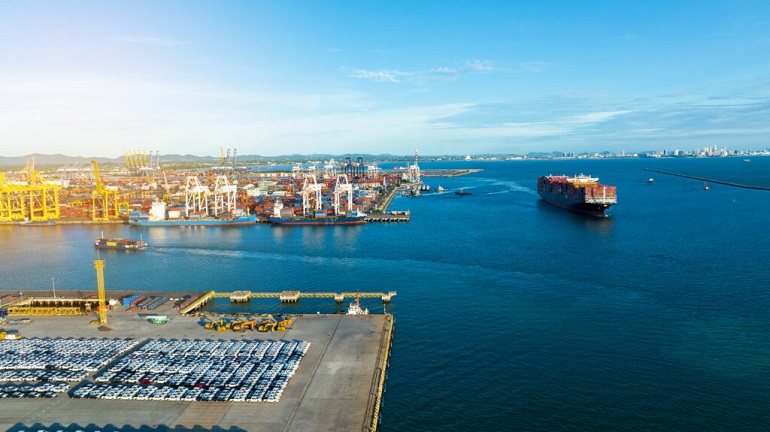
Germany’s Federal Association of Wind Farm Operators Offshore (BWO) has urged government to support the growth of port infrastructure and strengthen the country’s maritime economy during the energy transition.
“Strengthening the maritime economy is essential for the expansion of offshore wind energy. The expansion targets for offshore wind energy – from 8.3GW today – to at least 30GW by 2030 and 70GW by 2045 are a huge opportunity for Germany as an industrial location and our European partners,” said BWO managing director Stefan Thimm.
“We need quick answers from the German government on how it will protect investments in the energy transition at sea – we cannot solve the new security challenges alone,” he noted.
Port infrastructure is the logistical hub of offshore wind energy. For an energy transition under Germany’s own steam, Thimm said: “We need larger space capacities for the production, manufacturing, handling and storage of components for offshore wind farms, as well as for the recycling of old plants during dismantling.”
Heavy-duty quay edges are particularly important, he said, adding this poses enormous investment costs for the ports and thus for the responsible federal states.
“Here, we recommend greater financial support for the federal states by the federal government within the framework of port burden equalisation,” added Thimm.
The BWO welcomed the call of the coalition factions for financial and regulatory support for maritime infrastructure and production capacities, such as the construction of 2GW converter platforms for the grid connection of offshore wind energy.
“These offer enormous value creation potential for the maritime industry. To connect at least 70GW to the power grid by 2045, at least 20 more such platforms are needed. We hope that the Warnow shipyard in Rostock-Warnemünde and the Rönner Group’s locations in Bremerhaven will be able to benefit from this support,” said Thimm.
The offshore wind industry offers “enormous potential” as an employer of the future for people in maritime locations, with 80,000 specialists in offshore wind energy currently working across Europe and this is expected to create up to 300,000 jobs by 2030, noted BWO.
“It is also pleasing that the coalition factions are calling for a generation capacity of 10GW for offshore electrolysis and want to push ahead with the expansion of electrolysers at sea and on land. The scaling up of onshore and offshore electrolysis must begin now and the ramp-up of the technologies must be accelerated,” added Thimm.