


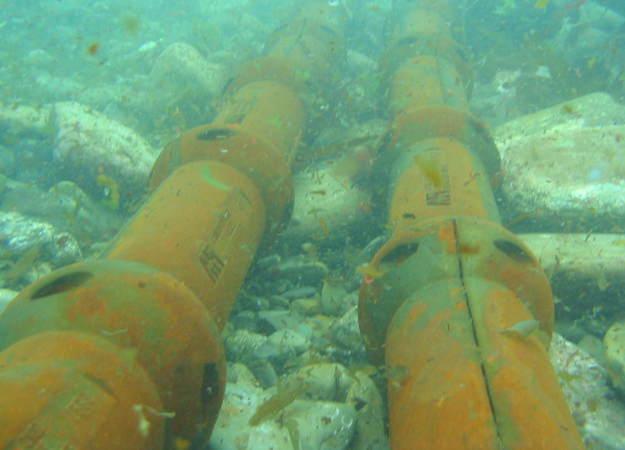
New research from The Crown Estate and the Centre for Environment, Fisheries and Aquaculture Science (Cefas) aims to help stakeholders involved in offshore wind developments better assess the impacts of electromagnetic fields (EMFs) from subsea power cables on the marine environment.
The report will lead to an improved understanding of the potential effects of EMFs – produced by power transmitted through subsea cables – on marine species, providing further evidence to facilitate and accelerate decisions in the planning and consenting of offshore wind developments.
It is the result of a two-day workshop, organised by Cefas and the Scottish government, which brought together 15 leading scientific minds on EMFs from across a variety of fields, including electrical engineers, oceanographers, (geo)physicists and biologists to share knowledge and set out priority actions to improve future processes.
The report ‘Electromagnetic Fields (EMFs) from subsea power cables in the natural marine environment’ provides insights that will feed directly into a follow-on project, funded by Offshore Wind Evidence and Change (OWEC), named ‘Floating Offshore Wind Environmental Response to Stressors (FLOWERS)’, which will build understanding of EMFs as an environmental stressor associated with floating offshore wind.
The Crown Estate has committed a total investment of up to £50m to the OWEC programme and brings together a coalition of 27 government organisations, industry bodies, and environmental NGOs to support a range of projects that will create a data and evidence base that can be used to shape the future of offshore wind and the marine environment.
The Crown Estate’s head of marine planning Olivia Thomas said: “The UK’s offshore wind champion, Tim Pick, highlighted that a lack of reliable data is a major contributor to delays in the consenting process, which is why the work of the £50m OWEC programme is so important.
“Through OWEC, we are delighted to have invested £1.4m to make this pioneering research possible. It contributes to a growing body of evidence to support the co-existence of vital industries such as fishing and offshore wind, to help the UK meet its net zero targets, and to encourage a thriving marine environment. It is another step forward in building a sustainable offshore wind industry in the UK which is based on the very best data and evidence, for the benefit of all.”