


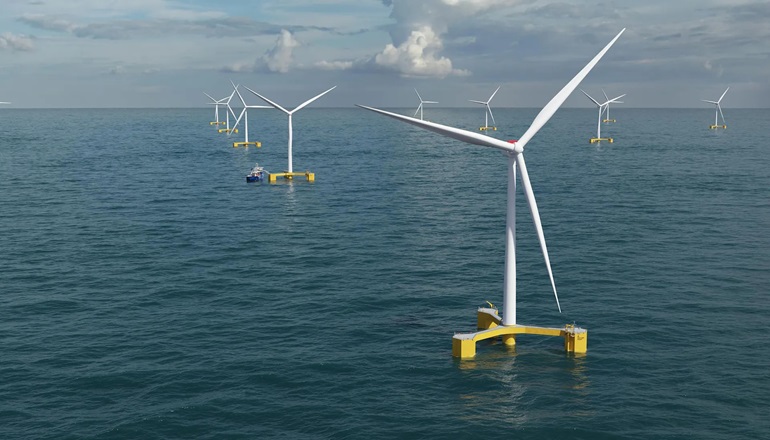
The Crown Estate has published further detail on its plans for floating wind leasing in the Celtic Sea, to unlock up to 4GW of capacity in England and Wales and help establish a new industrial sector.
The plans include a focus on two key project categories: early commercial-scale projects of 300-350MW and full commercial-scale projects of up to 1GW.
The leasing process could see rights awarded by the end of 2023, with projects delivered from 2030 into the early part of the next decade.
Also included in the proposals are details of leasing “designed at a pace and scale” to support supply chain and infrastructure development, helping to underpin a sustainable future for the sector, and ensure Wales, the South West, and the wider UK benefit from the industrial opportunity.
The proposals also include a revised approach to spatial design and Habitats Regulations Assessment (HRA), which will see the Crown Estate conduct an integrated spatial design and Plan-Level HRA ahead of market tender.
This is to help identify key environmental issues at the earliest opportunity, helping to de-risk investment, minimise environmental risk, and streamline the overall programme.
The Crown Estate will also work with the electricity system operator and others to support a coordinated grid solution for floating wind projects, in line with the work underway through the Offshore Transmission Network Review, to accelerate grid development and mitigate impacts on communities onshore.
The Crown Estate will now begin the next stages of its engagement with market and stakeholders on the floating wind programme, which will take place in two phases over the winter of 2021/22.
Phase one will focus on the spatial design, gathering data and evidence to help inform the location of project sites.
Phase two will invite views on the design of the market tender and the wider considerations of the programme, including on supply chain, ports and grid, as well as community benefits, such as skills and employment.
To ensure a coordinated approach to assessing potential environmental impacts, the Llyr and Whitecross test and demonstration scale projects (announced earlier this year) will form part of the Plan-Level HRA for floating wind in the Celtic Sea.
Crown Estate marine managing director Huub den Rooijen said: “Floating wind technology offers a powerful opportunity to open up the renewable energy resources of the Celtic Sea, helping to tackle the climate crisis with additional clean power and ignite a new industrial sector.
“We are focused on realising this potential in a way that supports the development of the regional supply chain and infrastructure, protects our marine environment, and harnesses the opportunity for local communities.”