


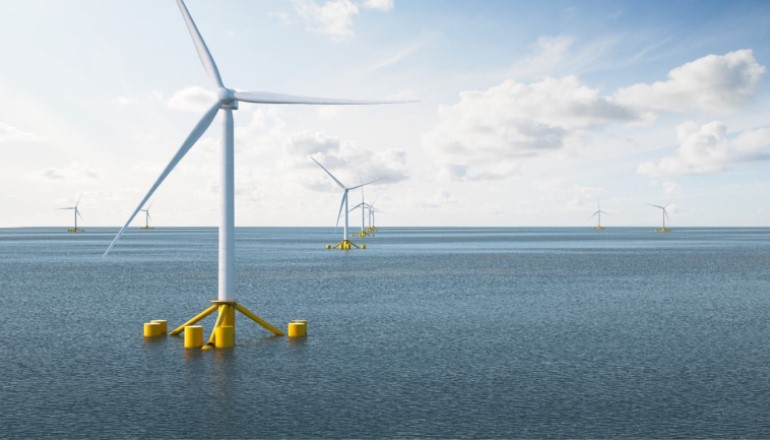
New research from the Crown Estate reveals up to 5300 new jobs could be created from the development of new floating wind farms in the Celtic Sea.
The research also estimates a £1.4bn economic boost could be generated from the sites.
The Celtic Sea Blueprint has determined the minimum supply chain and infrastructure requirements for the trio, announced by the Crown Estate in December.
It also examined the gaps, such as ports deep enough for handling the giant turbines, vessels to service the sites, and export cables to transport electricity to land.
Three wind farms off the south-west coast of England are expected to generate up to 4.5GW of electricity.
The windfarms will require 260-plus turbines around the same height as the Shard on a floating platform about the size of a football pitch.
More than 1000 anchors to secure the floating machines to the seabed, with at least 300km of mooring lines will also be needed.
Nearly 900km of cables, nearly enough to stretch from Lands End to John o’ Groats will link up the turbines and connect them to the electricity network.
The Crown Estate will establish a pilot £10m fund to support early-stage projects to capture some of these opportunities.
Managing director of marine at the Crown Estate and RenewableUK Gus Jaspert said: “If the UK is to make the most of the economic and environmental opportunities from the transition to renewable energy, we must be on the front foot, acting now to develop the supply chain capability, skills and infrastructure needed to establish not just these wind farms but future floating wind farms in the Celtic Sea and elsewhere.
“Using this research, we want to work with the industry, trade organisations, local communities and across governments to make sure we are harnessing all the available opportunities and supporting the UK in continuing to accelerate its world-leading position in offshore wind.”
RenewableUK’s chief executive Dan McGrail, co-chair of the Floating Offshore Wind Taskforce, said: “The Celtic Sea Blueprint shows that floating wind can deliver immense industrial growth in the south west of England, South Wales and throughout the UK, with multi-billion pound opportunities to build up new supply chains and create thousands of jobs during the construction phase alone, especially in coastal communities.”