


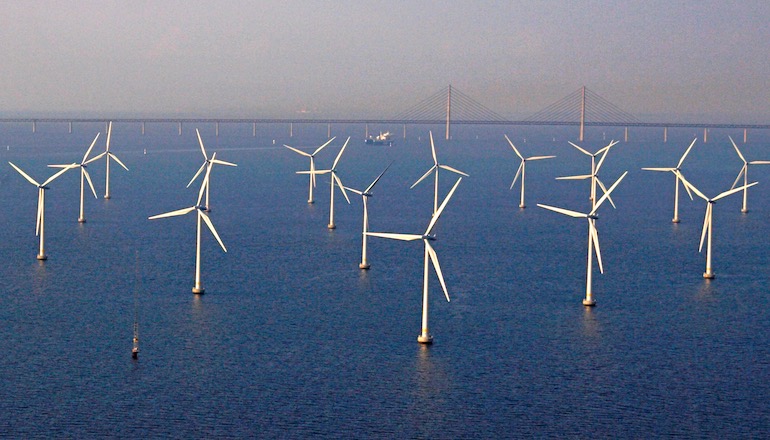
The Danish Energy Agency will now require a strategic environmental assessment (SEAs) for offshore wind farms to be completed prior to submission of final bids starting with the up to 1GW Thor project.
The change of approach follows a decision late last year concerning the Vesterhav Syd offshore wind farm.
The Danish Energy Appeal Board decision of 20 December 2018 concerning Vesterhav Syd offshore wind farm has led to changes to how environmental surveys and impact assessments will be completed for offshore wind projects, starting with Thor, to ensure a legally appropriate process ahead of permitting.
The process for the SEA of Thor offshore wind farm is expected to be completed by the second quarter of 2021.
The concession winner will be required to carry out an EIA of the project.
The adjusted approach is based on a thorough analysis of the underlying legal framework, approaches used in other areas and in other countries, as well as risk-mitigation, and other factors.
As part of its analysis, the Danish Energy Agency consulted the Ministry of Environment and Food of Denmark, the Danish Environmental Protection Agency, Kammeradvokaten, grid operator Energinet as well as the industry represented by Wind Denmark.
Developers have also been involved.
At the operational level, Energinet will be responsible for carrying out the SEA-process by order from the Danish Energy Agency.
In addition to the SEA, Energinet will also carry out a range of EIAs as it has typically done on previous projects.
The purpose of the additional assessments is to provide critical data for as much risk-mitigation as possible for the Thor offshore wind site.
The additional assessments focus on bird surveys, safety of navigation, radio links and radar, fisheries, marine archaeology, noise and cumulative impacts.
After the deadline for bidding, the concession winner will carry out the EIA of the entire project, including the wind farm, offshore substation and export cables.
In addition, Energinet will undertake an EIA of the entire onshore grid infrastructure, which is expected to be completed by the third quarter of 2021.
An environmental permit enabling the construction of Thor will only be approved once all required assessments have been completed and approved.
Prior to the launch of the assessment, a hearing for public and relevant authorities will be carried out, followed by another hearing when the environmental impact assessment report and a draft licence for construction has been produced.
Then, the final approval about whether a licence for construction can be granted. There will be a four-week time limit for complaints after granting the licence.
The core aims of the increased environmental impact analysis and the new approach is to ensure a legally appropriate process, reduce risks for developers, reduce procedural risk related to appeals, in order to facilitate lowest possible bid price and set up a transparent and inclusive consultation process with local citizens and stakeholders.
The new approach for Thor will also become the standard for subsequent offshore wind tenders and is adaptable for complex and less complex projects.
For example, the Thor offshore wind farm project will be tendered with an 800-1000MW capacity, with the grid connection included in the call for tender, all of which requires flexibility concerning positioning of turbines and offshore substation.
The Danish Energy Agency will hold a first information meeting with local citizens and stakeholders on the process for environmental assessments for Thor offshore wind farm in the first quarter of 2020.
The meeting will have a focus on the SEA of the overall project as well as the environmental impact assessment for the onshore portion of the project.