


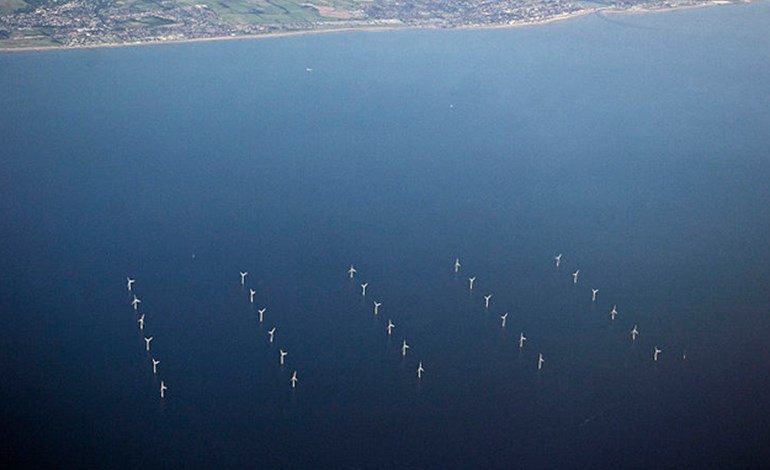
Coastal communities will benefit more from nearshore wind farms compared with offshore facilities located over 20 km from shore, a new Danish study has found.
The analysis, by KPMG for HOFOR and European Energy, suggests wind farms closer to the coast can contribute to a cost-effective achievement of Denmark’s target to cut carbon dioxide emissions by 70% by 2030.
HOFOR business and finance director Jan Kauffmann said Denmark cannot rely on North Sea wind underpinning the entire green transition.
“It is too expensive and, moreover, risky for security of supply, which becomes stronger when we have a mix of different technologies and renewable energy sources,” he said.
The study has produced several scenarios based on publicly available data.
It compares the planned 1GW Danish offshore wind project Thor with five coastal offshore wind farms with the same total capacity.
The 1GW of coastal wind farms achieve a socio-economic gain of 2-14% compared with the large offshore wind farm far from shore.
“The analysis shows that coastal winds are cheap, quick to establish and easier to locate near the major cities where power is needed. Considering how big the green transition is, coastal wind is an important solution to achieve in the Danish goal,” said Kauffmann.
The study highlights that the shorter distance to the coast and lower water depth make it cheaper to establish nearshore wind farms.
Other savings come from reduced cabling and electrical infrastructure costs when locating wind farms close to shore and closer to the onshore power grid.
KPMG’s study also found that having smaller coastal wind farms increases security of supply, as any interruption to supply is limited to one of the individual sites, rather than affecting the supply of one very big wind farm.
HOFOR is currently developing two coastal wind parks, while European Energy is working on three parks, as well as a pilot off Frederikshavn.
All five projects will use existing onshore grid infrastructure to relocate the electricity produced to consumers, whereas a large-scale offshore wind farm such as Thor will require offshore transformers and grid reinforcement.
European Energy managing director Knud Erik Andersen said electricity grid upgrades are an expense that building coastal offshore wind farms can avoid.
Both European Energy and HOFOR said that while Denmark should exploit the favourable wind conditions in the North Sea, solar, onshore wind, coastal wind parks and biogas also have a “natural place in the Danish energy mix”, as each technology has specific advantages that complement the others.