


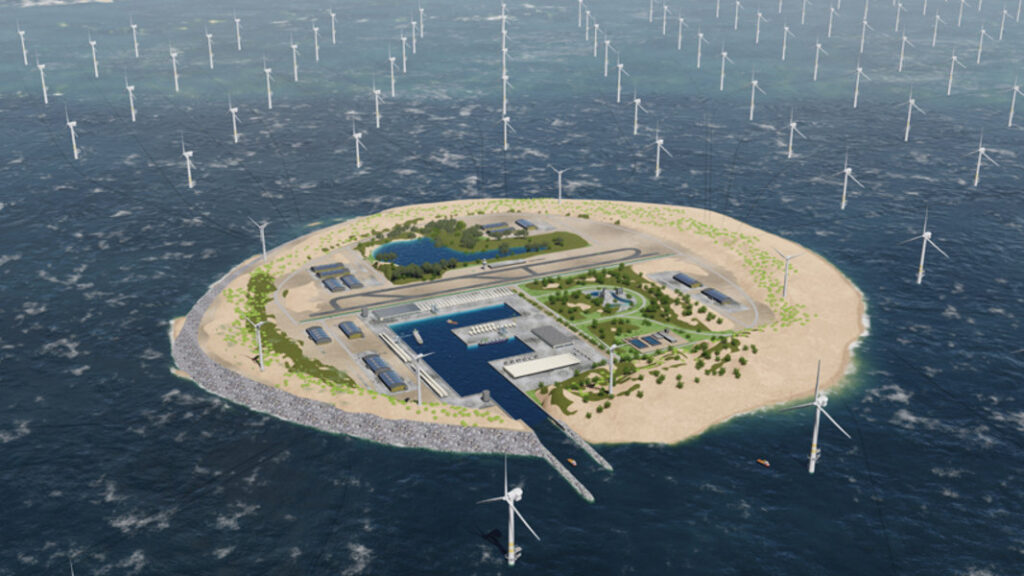
Denmark and the Netherlands have signed a memorandum of understanding (MoU) outlining a potential joint commitment to develop offshore wind hubs linking the countries.
The MoU, signed by both countries’ transmission system operators, outline an intention to develop “possibly one or more” offshore energy hubs, connecting large offshore wind farms to both countries, potentially in combination with green hydrogen production.
The MoU’s objective is to “initiate cooperation on the planning of possibly one or more offshore energy hubs with one or more interconnectors for mutual benefit of the two countries.
“This could improve security of supply, bring diversification of energy sources, and facilitate energy system integration of wind power across sectors (e.g. energy, transport and industry).”
Under the additional MoU, Denmark’s Energinet and Dutch-German grid operator TenneT have agreed to carry out analysis in several areas, which will inform, before 2022, a joint decision by the countries on whether to continue their intended joint collaboration on offshore energy hubs.
The analyses will be “anchored” in the existing cooperation between the TSOs under the North Sea Wind Power Hub Programme, with the aim of installing the first joint project in 2030 at the earliest.
The analysis will cover areas that include capacity development and timing, such as national offshore wind arrangements and targets and offshore wind designated areas and developments zones, power-to-x conversion capacity and arrangements and targets, interconnector capacity.
Another area for analysis includes the technology to deliver the hubs, such as the hub-and-spoke concept, concentrated versus integrated distributed hub systems, potential of electrolysers for converting wind power into other energy carriers (P2X) and location of these plants, as well as interconnectors and grid connection technologies and interoperability of high voltage direct current (HVDC) technologies.