


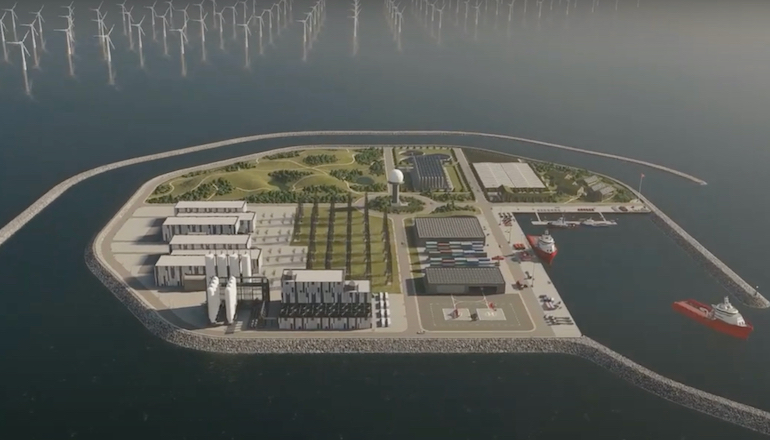
The Danish Energy Agency (DEA) is conducting a market dialogue for potential bidders and relevant industries on the procurement framework for the proposed artificial energy island in the North Sea.
DEA said the market dialogue is part of the initial preparations for the coming procurement procedure for co-ownership of the island with the Danish state.
The specific framework for the coming procurement procedure will be established in a subsequent political process, it added.
The market dialogue will concern the co-ownership of the island and will not deal with the conditions for establishing wind farms and power transmission connections.
DEA said it will invite up to 10 commercial operators to participate in virtual dialogue meetings via Skype.
A group of several commercial operators, for example a consortium, that wishes to participate jointly in the dialogue meeting will be considered one commercial operator in this context.
“The selection of participants for the virtual dialogue meeting will be based on the aim to secure a broad composition of relevant market operators and potential tenderers, preferably consisting of potential commercial co-owners of the energy island, relevant financial investors and contractors and/or project developers,” the agency said.
DEA also encourages all relevant market operators and potential tenderers to submit written recommendations and answers to the questions raised by the agency in a ‘discussion paper’ that will be made available on 15 March.
The deadline for requests to participate in the virtual meetings is midday local time on 16 March.
Invitations to participate will be sent out on 18 March, with the meetings taking place between 22 and 26 March.
The deadline for the submission of written answers and recommendations in 6 April.
After the dialogue meetings, the DEA will publish a short summary of the overall findings from the market dialogue.
It expects to issue invitations for a second market dialogue in the fourth quarter of 2021, where the specific procurement framework is expected to have been established.
In February, a broad majority of the Danish Parliament agreed that the island should be artificial connecting and distributing power from surrounding offshore wind farms.
The island would have an initial capacity of 3GW and may rise in the future to 10GW.